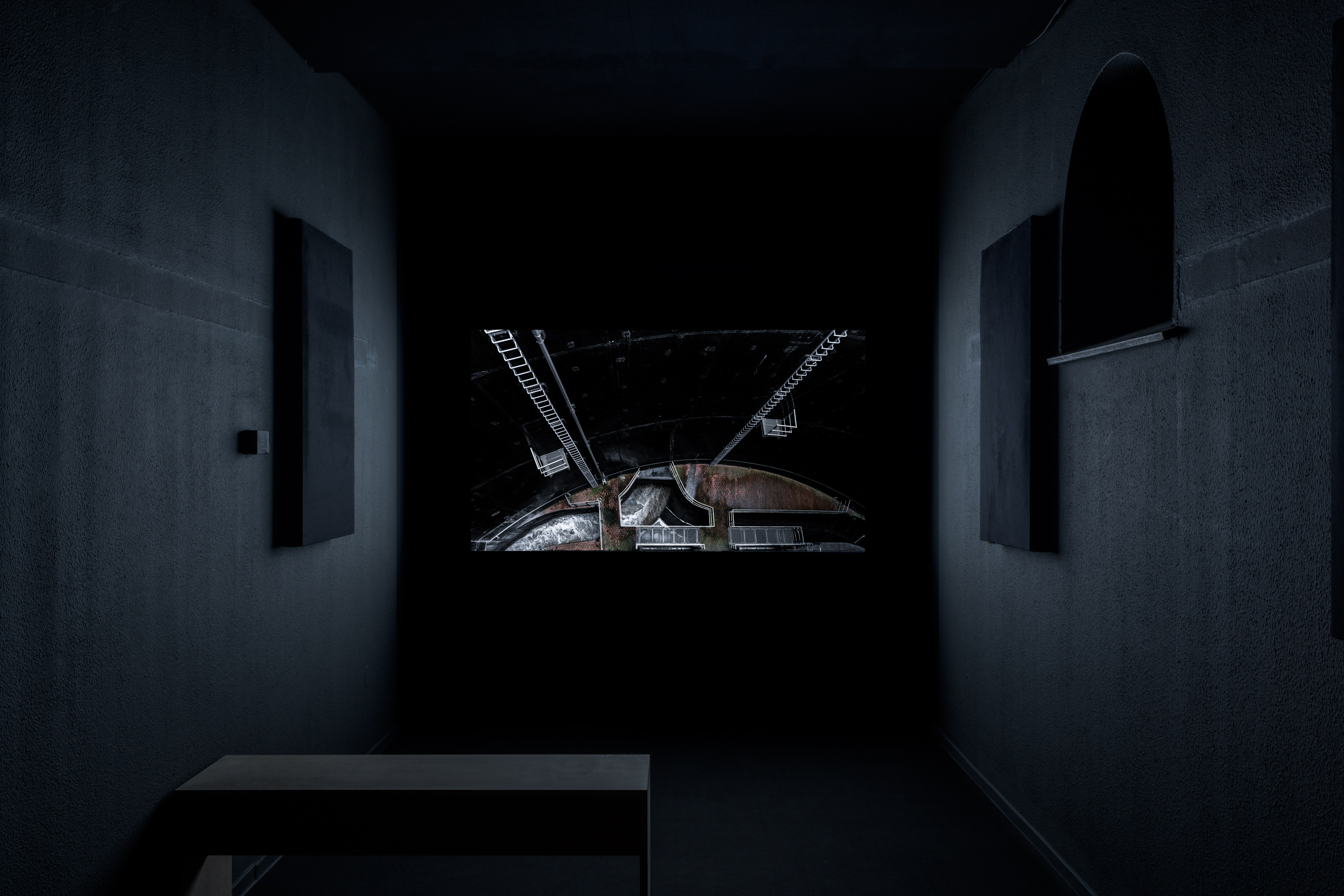
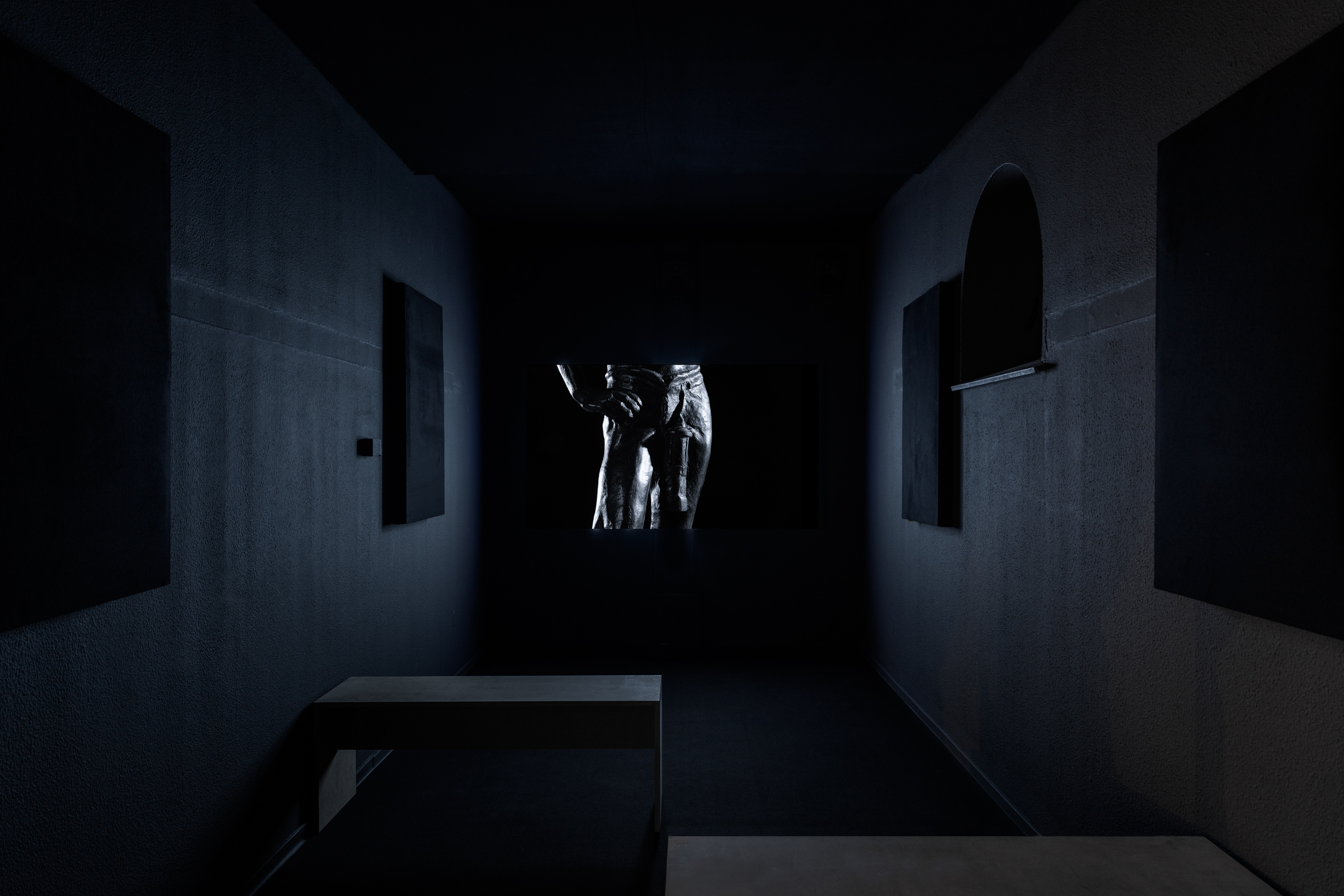
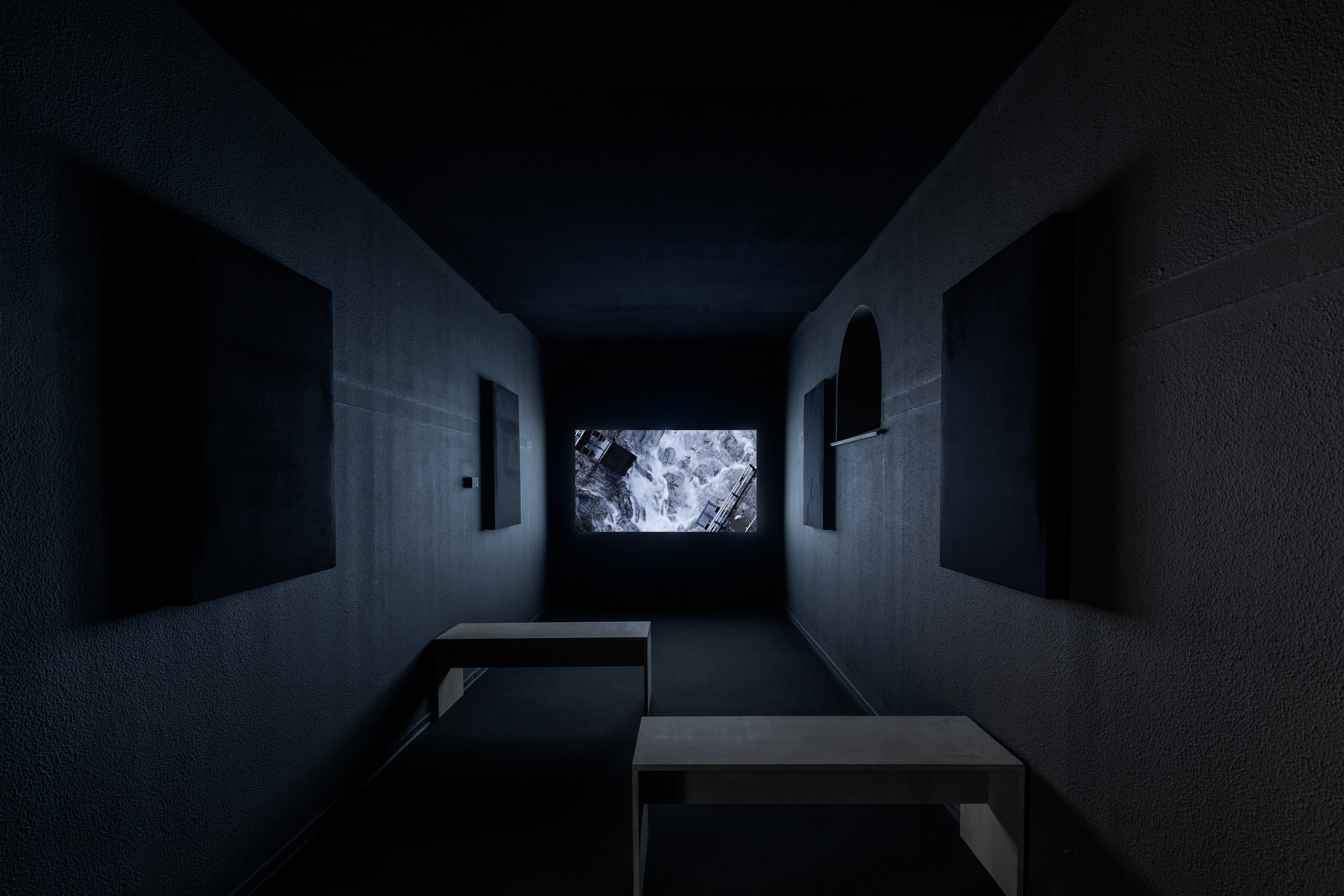
Mit Videos, Fotografien und Installationen untersucht Niklas Goldbach die Schnittstelle zwischen Architektur und Strukturen sozialer Kontrolle. Anlässlich der Rückkehr in seine Heimatregion schuf er eine Videoarbeit, in der er Realität und Fiktion miteinander verwebt, um das Schicksal der postindustriellen Infrastruktur des Ruhrgebiets zu erforschen und dabei die Ikonografie von Arbeit und Männlichkeit aus einer queeren Perspektive neu zu beleuchten.
Die Arbeit hinterfragt die Funktion des männlichen Körpers als idealisiertes Propagandainstrument, das historisch gesehen ein entscheidendes Element im Ethos der Bergleute war, sowie einen wesentlichen Aspekt des industriellen Erbes des Ruhrgebiets: die Ewigkeitslasten. Diese finanziellen und ökologischen Belastungen, zu denen unter anderem die Entwässerung und die Überwachung der Bergwerksstrukturen gehören, müssen dauerhaft bewältigt werden – eine Folge jahrhundertelanger Kohleförderung durch Bergleute unter den Städten und Gemeinden der Region. Diese Vergangenheit ist untrennbar mit der Gegenwart verbunden und erzeugt einen Zustand ständiger Arbeit, der von der Oberfläche aus weitgehend unsichtbar bleibt.
Ausstellungskurztext Manifesta 16 Ruhr. Creative Mediators: Krzysztof Kościuczuk und Anda Rottenberg
Niklas Goldbach works with video, photography, and installation probing the intersection of architecture and structures of social control. Revisiting his native region, Goldbach created a video work blending reality and fiction which explores the fate of the Ruhr's post-industrial infrastructure, re-examining the iconography of labor and masculinity through a queer gaze.
The work questions the function of the male body as an idealized propaganda instrument – historically a crucial element of the mining workers' ethos – as well as an essential aspect of the Ruhr's industrial legacy: Ewigkeitslasten, or "eternal obligations", financial and environmental burdens that must be shouldered in perpetuity, such as handling water drainage and structural monitoring, all of which result from centuries of coal extraction by men laboring away underneath the towns and cities. A past that is forever connected to the present: perpetual labour, mostly invisible from the surface. Yet this infrastructure is as fragile as it is vital: the pumps must never stop. As the work unfolds, the Pumpwerk increasingly slips into a state of fragility.
Exhibition short text Manifesta 16 Ruhr. Creative Mediators: Krzysztof Kościuczuk and Anda Rottenberg
| – |
Im Rahmen der Manifesta 16 Ruhr in Auftrag gegeben, wurde For the Ages (2026) im Pumpwerk Gelsenkirchen, vierzig Meter unter der Erde, und im Deutschen Bergbau-Museum Bochum gedreht. Das Werk stellt zwei verborgene Hinterlassenschaften des Steinkohlenbergbaus einander gegenüber: die Infrastruktur, die ehemalige Bergbauregionen vor Überflutung schützt, und die Skulpturen idealisierter Körper, die einst die Mythologie der tief unter Tage verrichteten Arbeit verkörperten.
Im Zentrum der Arbeit steht das Konzept der „Ewigkeitsaufgaben": das dauerhafte Abpumpen und Management des Grubenwassers, das nach der Schließung der Zechen notwendig bleibt. Unsichtbar und doch unverzichtbar ist diese Infrastruktur zu einer permanenten technischen, ökologischen und wirtschaftlichen Verantwortung geworden, die ehemalige Bergbauregionen lange nach dem Ende des Bergbaus bewohnbar hält.
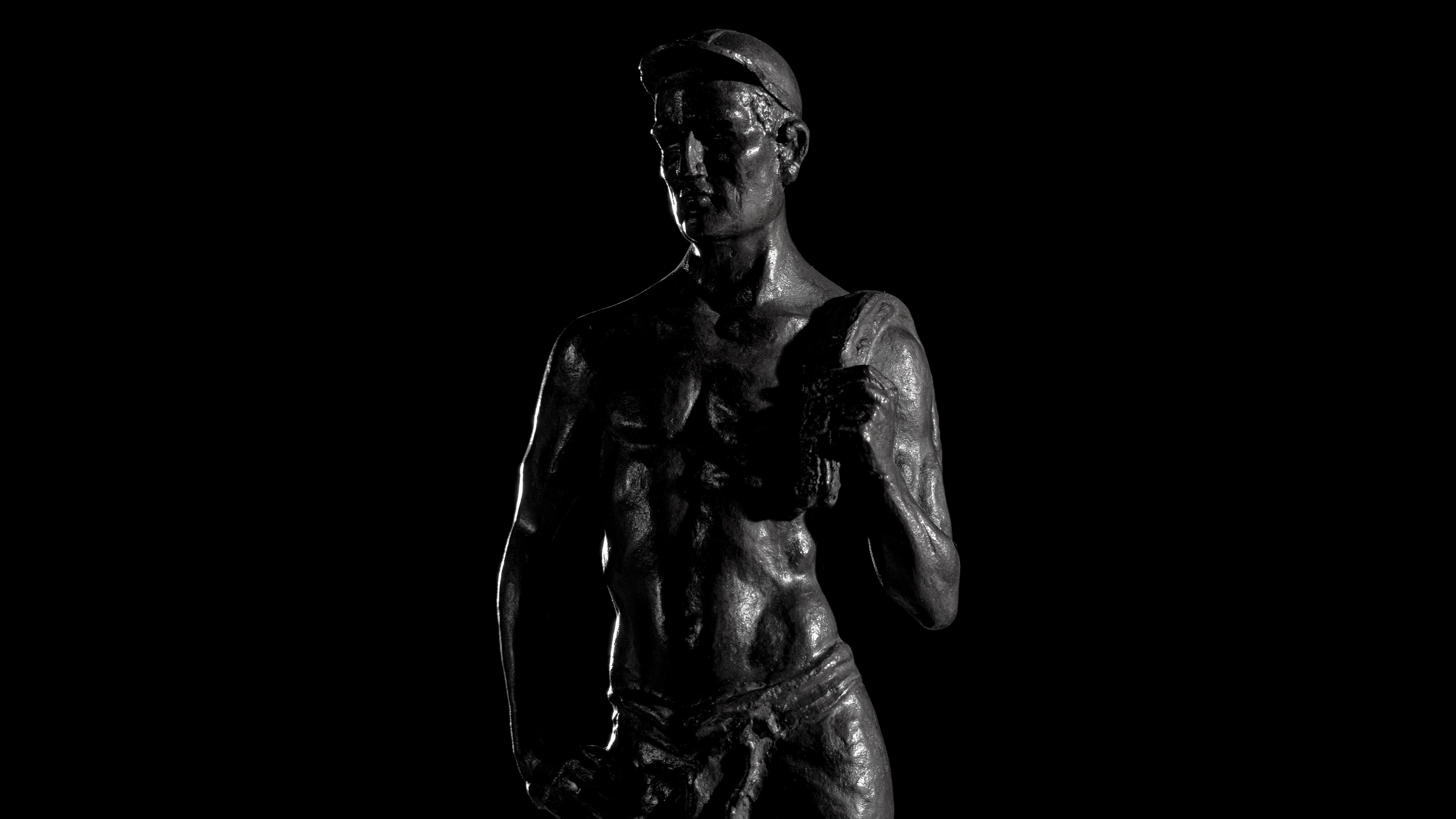
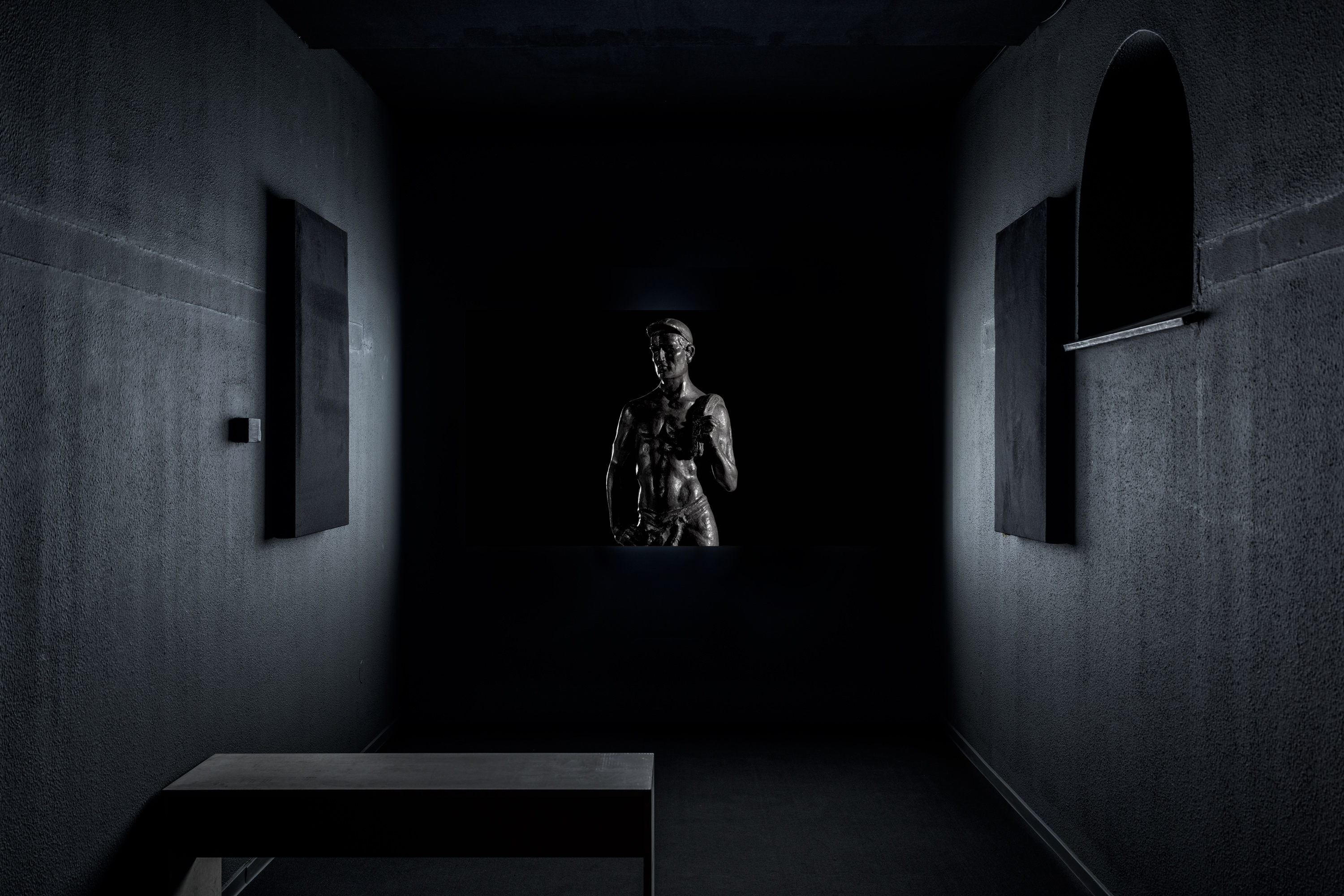
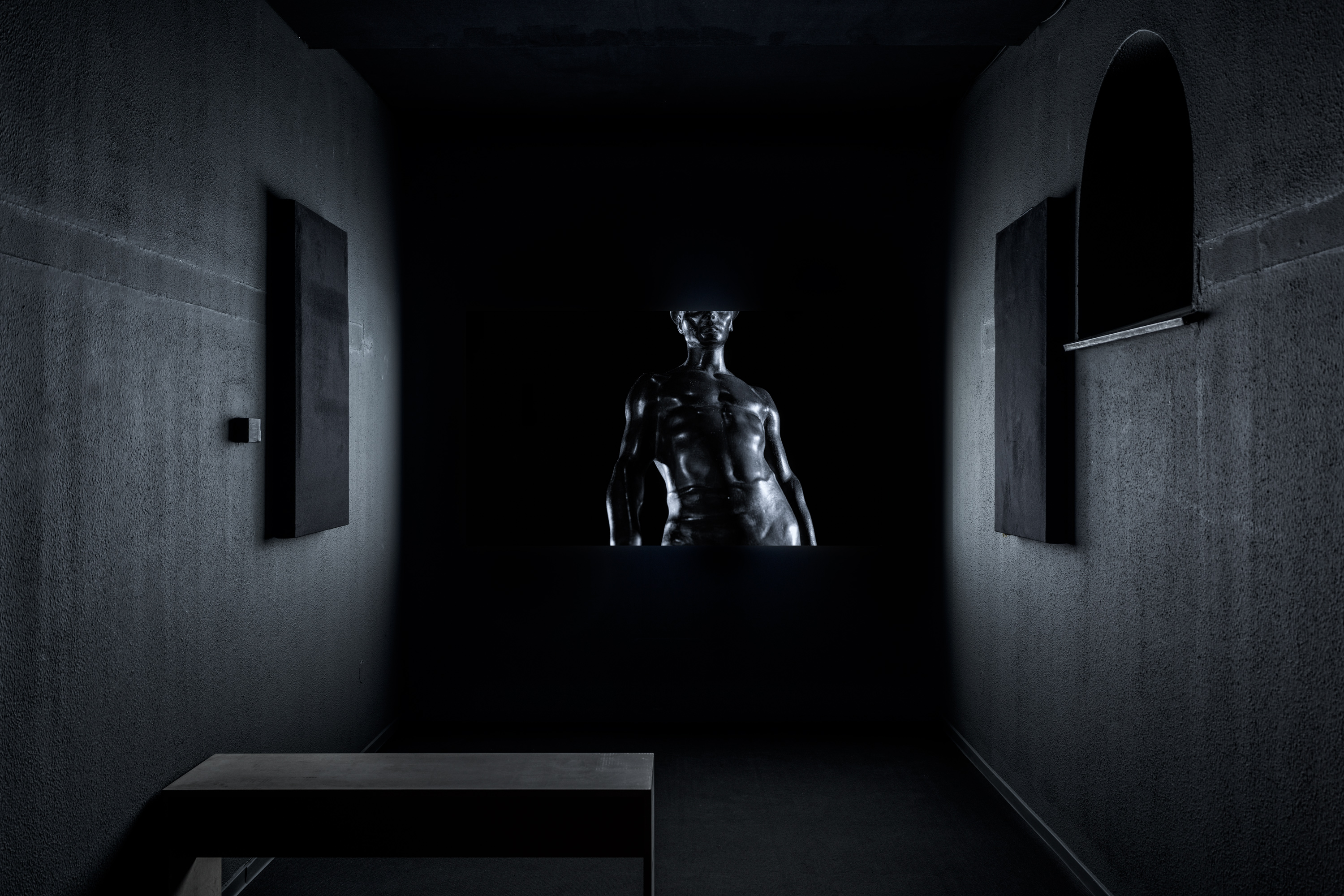
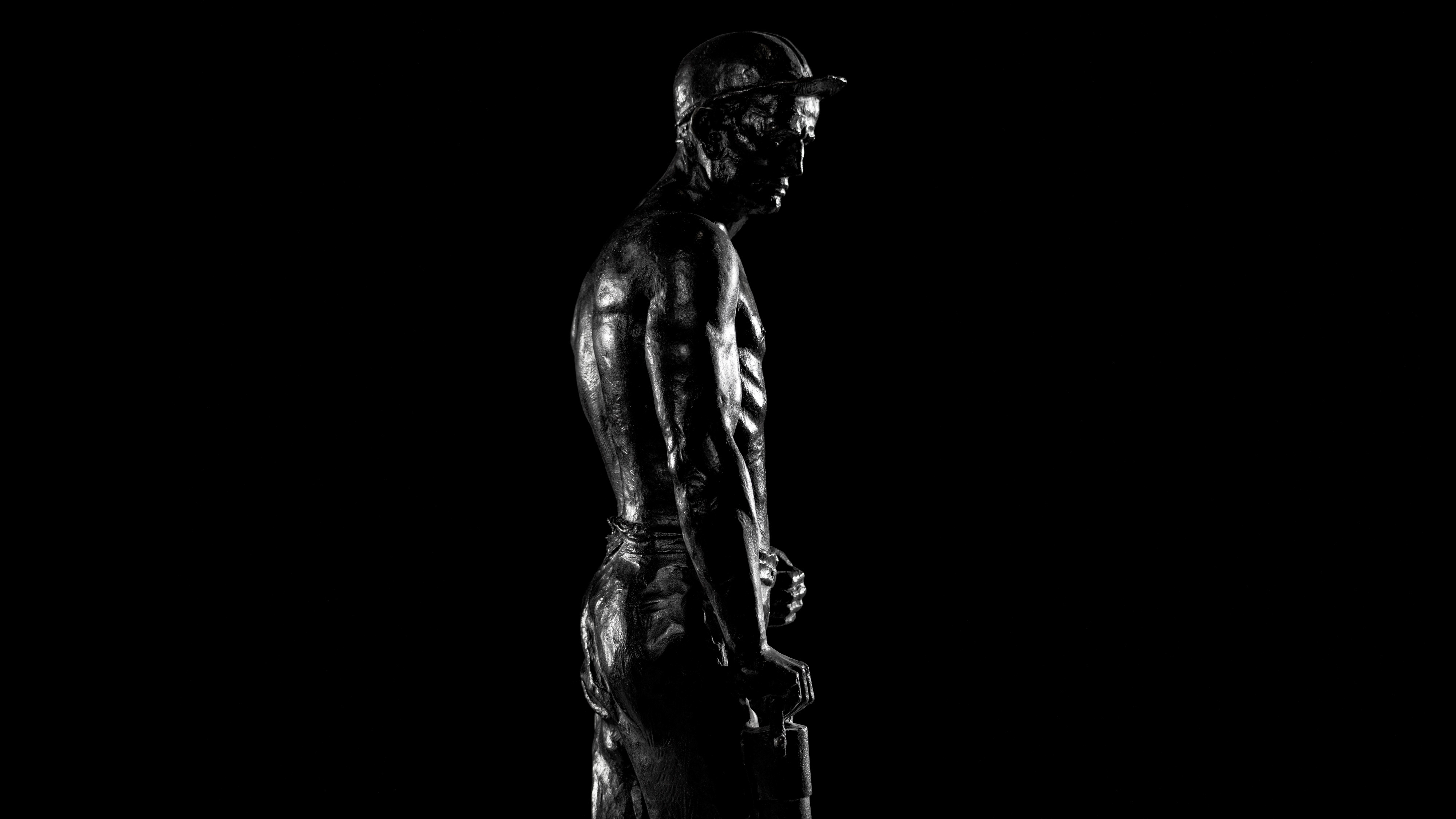
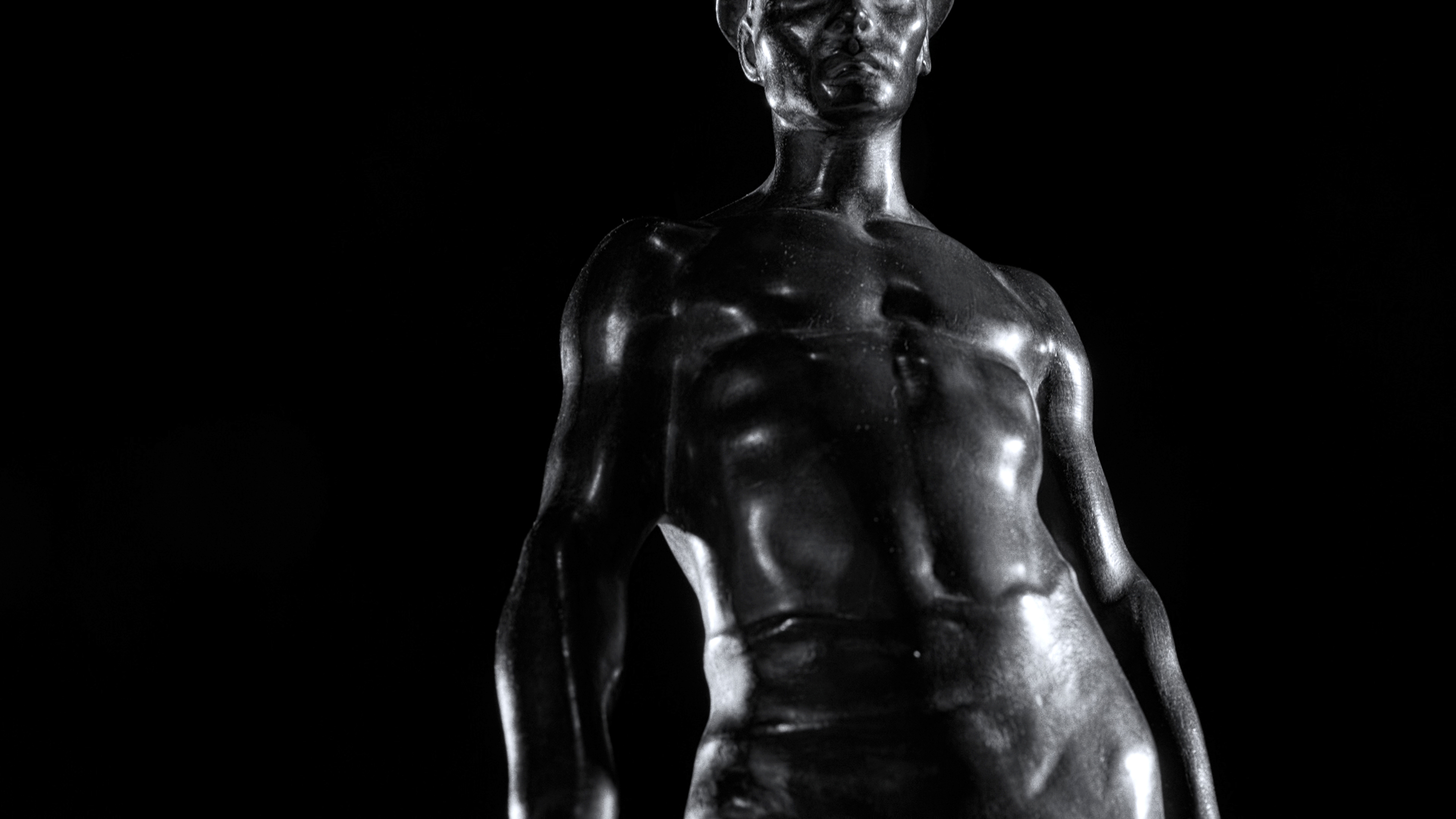
Goldbach kombiniert Aufnahmen des unterirdischen Pumpwerks mit ruhigen, beinahe zärtlichen Einstellungen erotisierter Bergarbeiterfiguren und unterläuft so die heroische Ikonografie industrieller Arbeit durch einen Blick, der Monumentalität zugleich intim und vieldeutig erscheinen lässt. Die Darstellung des männlichen Körpers erinnert an die Bildsprache klassischer Skulptur und deren spätere Aneignung durch Machtregime des 20. Jahrhunderts, in denen der idealisierte Körper zum Träger politischer Mythen wurde.
Unterlegt mit einer sich wiederholenden Karaoke-Version von Herbert Grönemeyers „Bochum" (1984), der inoffiziellen Hymne des Ruhrgebiets, verschränkt die Arbeit diese beiden Hinterlassenschaften zu einer gemeinsamen visuellen und klanglichen Landschaft.
Sammlungstext Fluentum, Berlin
Commissioned for Manifesta 16 Ruhr, For the Ages (2026) was filmed at Pumpwerk Gelsenkirchen, forty meters below ground, and at the German Mining Museum Bochum. The work juxtaposes two hidden legacies of coal mining: the infrastructure that prevents former mining regions from flooding and the sculptures of idealized bodies that once embodied the mythology of labor performed deep underground.
At the heart of the work is the notion of the “eternal tasks” (Ewigkeitsaufgaben): the perpetual pumping and management of groundwater required after the closure of coal mines. Invisible yet indispensable, this infrastructure has become a permanent technical, ecological, and economic responsibility, keeping former mining regions habitable long after mining has ceased.
Goldbach contrasts footage of the underground pumping station with lingering, caressing shots of eroticized miner sculptures, unsettling the heroic iconography of industrial labor through a gaze that renders monumentality intimate and ambiguous. Their depiction of the male body recalls the visual language of classical sculpture and its later appropriation by twentieth-century regimes of power, in which the idealized body became a vehicle for political mythology.
Set to a looping karaoke version of Herbert Grönemeyer’s ‘Bochum’ (1984), the region’s unofficial anthem, the work collapses these two legacies into a shared visual and sonic landscape.
Collection text, Fluentum, Berlin
| – |
Nearby, The Black Below (2026), a series of photographs by Nicolas Grospierre (b.1975), and For the Ages (2026), a video by Niklas Goldbach (b.1973), unearth the desolation of the Ruhr’s over-extracted post-industrial landscape. This dialogue is extended outside the venue in Madonna, a monumental coal sculpture by Mirosław Balka (b.1958), however the work is literal and underwhelming.
Excerpt from: Tina Sotiriadi, “Manifesta 16 Ruhr”, Burlington Contemporary, 28.08.2026
| – |
The artist returns to the Ruhr to look at what coal extraction left behind. His film reveals the “eternal obligations” that continue long after mining ends: pumping water and monitoring the ground. The work revisits the image of the ideal male miner, historically used in the Ruhr’s industrial propaganda.
Excerpt from: @cifraworld, “What to see at Manifesta 16 Ruhr?”, Instagram, 05.08.2026
| – |
Auch in den Hinterzimmern dominiert die Düsternis, gehen Gewalt gegen Menschen und die Ausbeutung der Natur eine unauflösliche Verbindung ein. So führt uns Niklas Goldbach zur Karaoke-Version von Herbert Grönemeyers „Bochum"-Hymne in die unterirdischen Pumpstationen hinab, die das ausgehöhlte Ruhrgebiet davor bewahren, im Grundwasser zu versinken. Gegen diese Ewigkeitskosten des Wirtschaftswunders montiert er in seiner Videoarbeit beschönigende, den tatsächlichen Arbeitsbedingungen und ihren körperlichen Folgen letztlich Hohn sprechende Bergmannskulpturen. Über allem thront ein 35 Meter langer Bildervorhang, auf dem Luc Tuysmans Motive aus Leni Riefenstahls NS-Propagandafilm „Triumph des Willens" verfremdet hat.
Auszug aus: Michael Kohler, „Amen ist nicht das letzte Wort", STERN, 11.07.2026
| – |
Nearby, Niklas Goldbach’s video For the Ages (2026) addresses the literal void on which the Ruhr valley sits, having been left sunken and flood-prone by centuries of mining. Massive water-pumping infrastructure must operate non-stop to prevent the region from becoming a post-industrial Atlantis. Goldbach juxtaposes footage of this hidden underground station with caressing shots of eroticized worker sculptures found at the German Mining Museum in Bochum, recalling Riefenstahl’s cinematographic care of Greek sculpture, recast in her work as Nazi body-idols.
Excerpt from: Ben Livne Weitzman, “Manifesta 16 Tests the Future of the Church”, FRIEZE MAGAZINE, 25.06.2026
| – |
Volviendo al territorio del Ruhr, el alemán Niklas Goldbach presenta un vídeo que mezcla realidad y ficción, donde revisita su región natal y examina su legado industrial a través de una mirada queer. Además cuestiona la iconografía del trabajo y la masculinidad mientras aborda las Ewigkeitslasten —las “obligaciones eternas”—, una herencia financiera y medioambiental que sigue activa bajo la superficie de la región.
Auszug aus: María Muñoz, „La Bienal Manifesta 16 activa iglesias y comunidades", Neo2 Magazine, 25.06.2026
| – |
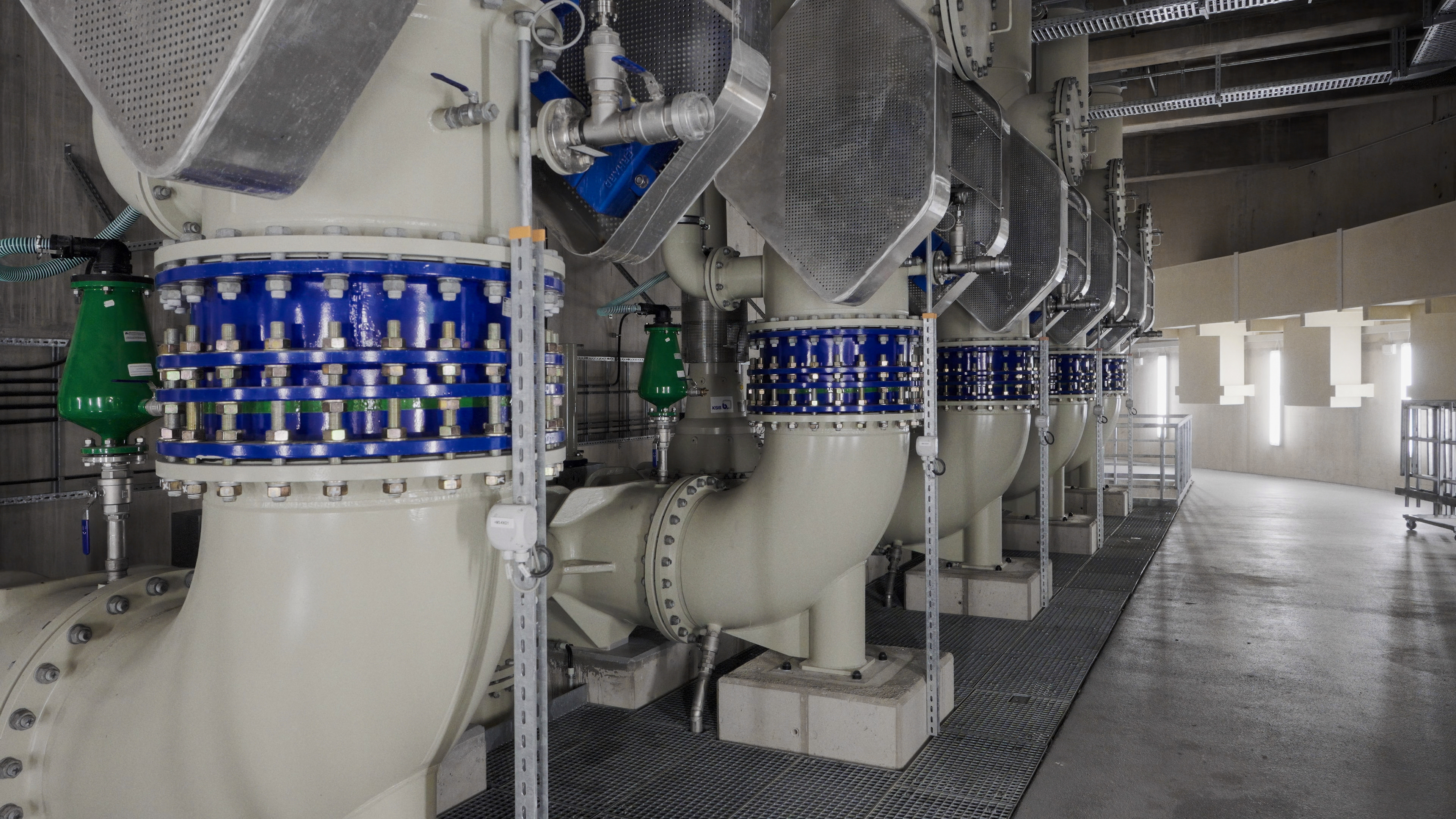
Zu diesem Thema passen Nicolas Grospierres Fotos leerer Landschaften, die der Kohle-Abbau hinterlassen hat. Und auch Klänge, die aus einem Nebenraum dringen. Genauer hingehört, erkennt man Grönemeyers „Bochum" wieder – nur ohne Gesang. Die Karaoke-Version gehört zu einer starken Video-Installation von Niklas Goldbach, der in eindringlicher Weise zwei Arbeitswelten im Ruhrgebiet vor Augen führt: Die Nahaufnahmen muskulöser Bergarbeiter-Figuren in Bronze wechseln mit Bildern aus dem Pumpwerk in Gelsenkirchen, das 40 Meter unter der Erde seine Ewigkeitsaufgaben verrichtet. Allein das fortwährende Abpumpen des Grundwassers schützt das Revier bis heute davor, buchstäblich in seiner eigenen Geschichte zu versinken.
Auszug aus: „Wo die Vögel vom Himmel fallen – die Manifesta 16 in der Christ-König-Kirche in Bochum", kulturkenner.de
This theme fits Nicolas Grospierre’s photos of empty landscapes left behind by coal mining. And also sounds that drift in from an adjoining room. If listened to more closely, one recognizes Grönemeyer’s “Bochum” again – only without singing. The karaoke version belongs to a powerful video installation by Niklas Goldbach, who strikingly brings to light two working worlds in the Ruhr area: Close-ups of muscular miner figures in bronze alternate with images from the pumping station in Gelsenkirchen, which performs its eternal tasks 40 meters underground. Only the continuous pumping of groundwater protects the region to this day from literally sinking into its own history.
Excerpt from: “Where the Birds Fall from the Sky – Manifesta 16 in the Christ-König Church in Bochum”, kulturkenner.de
| – |
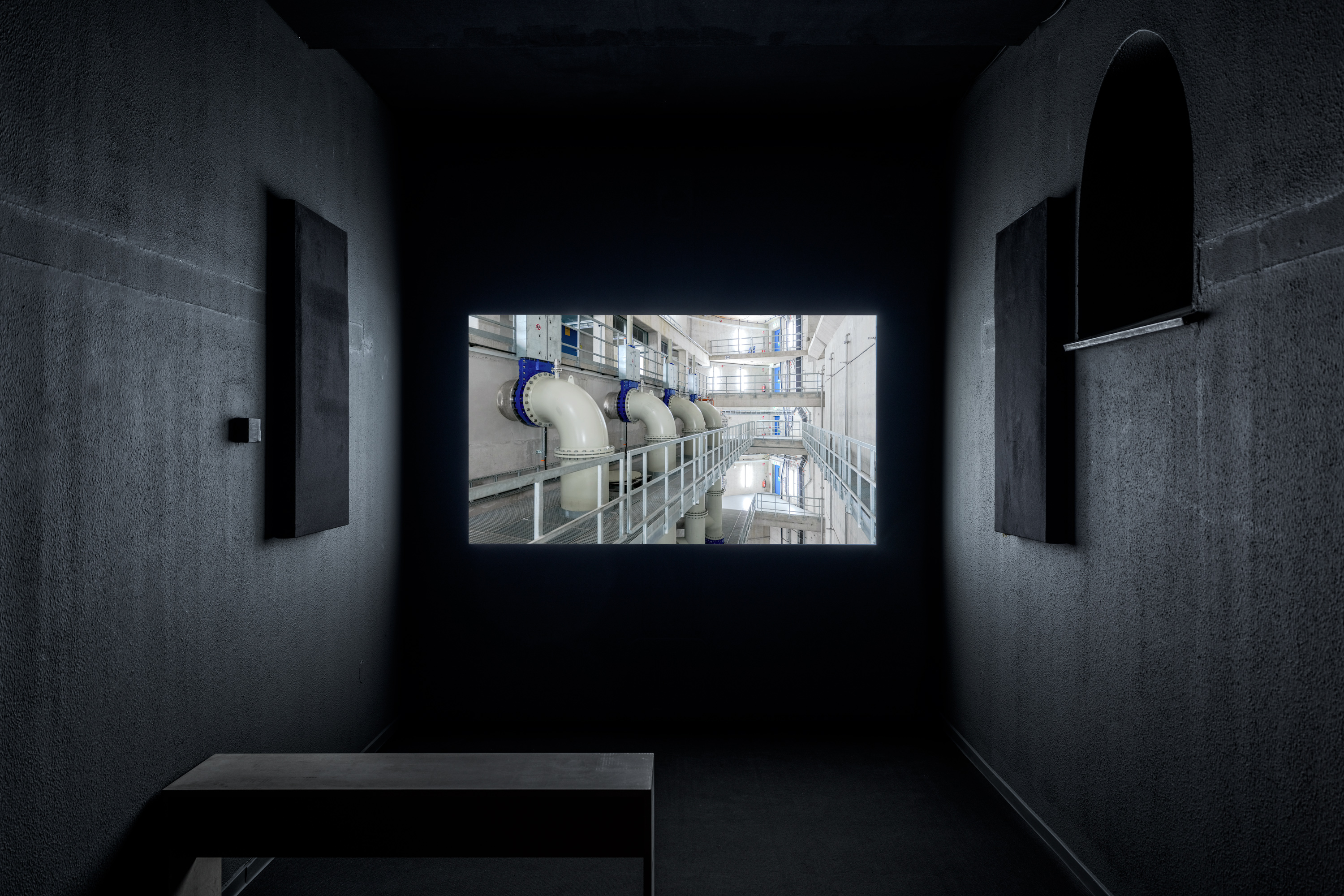
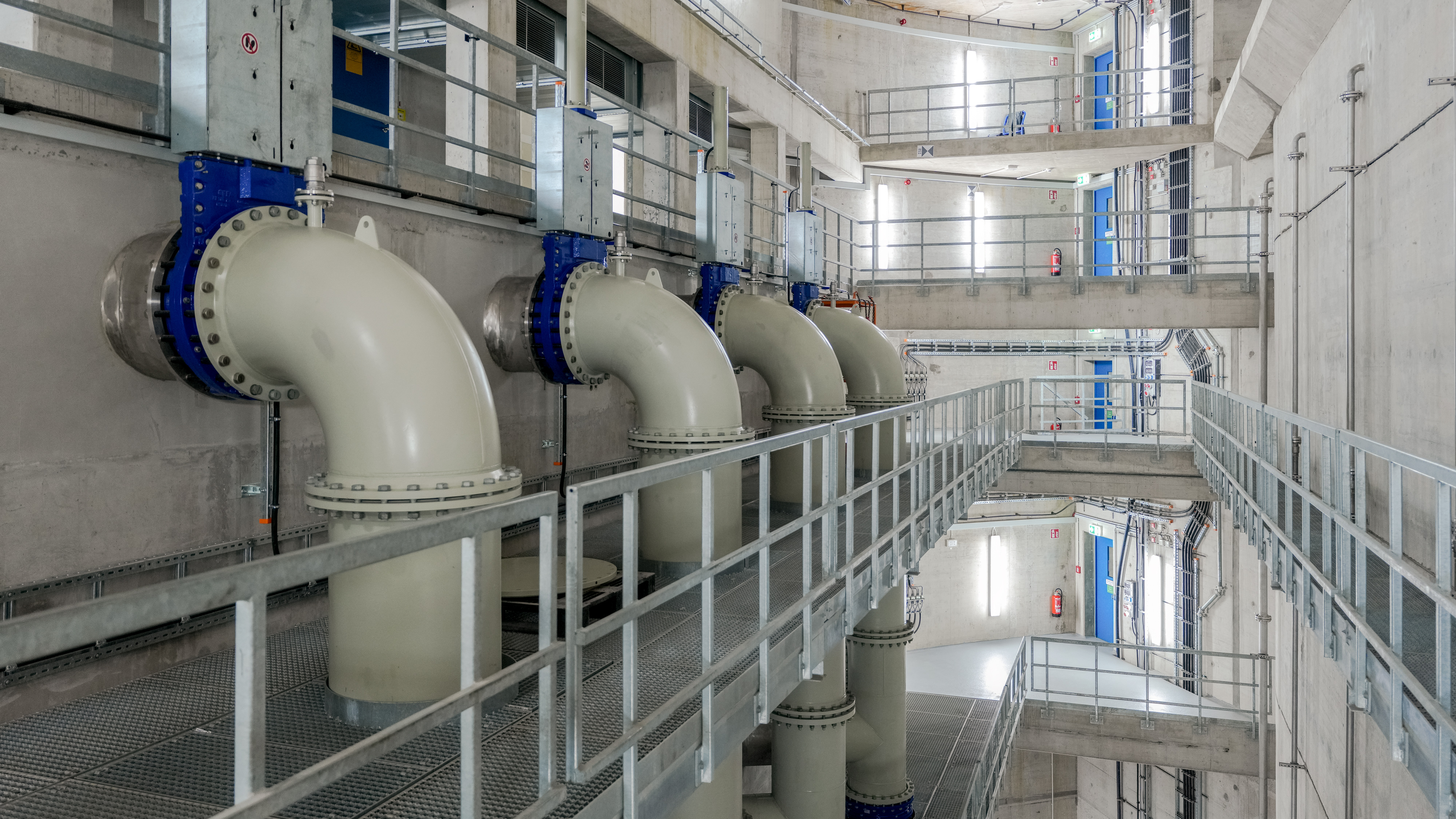
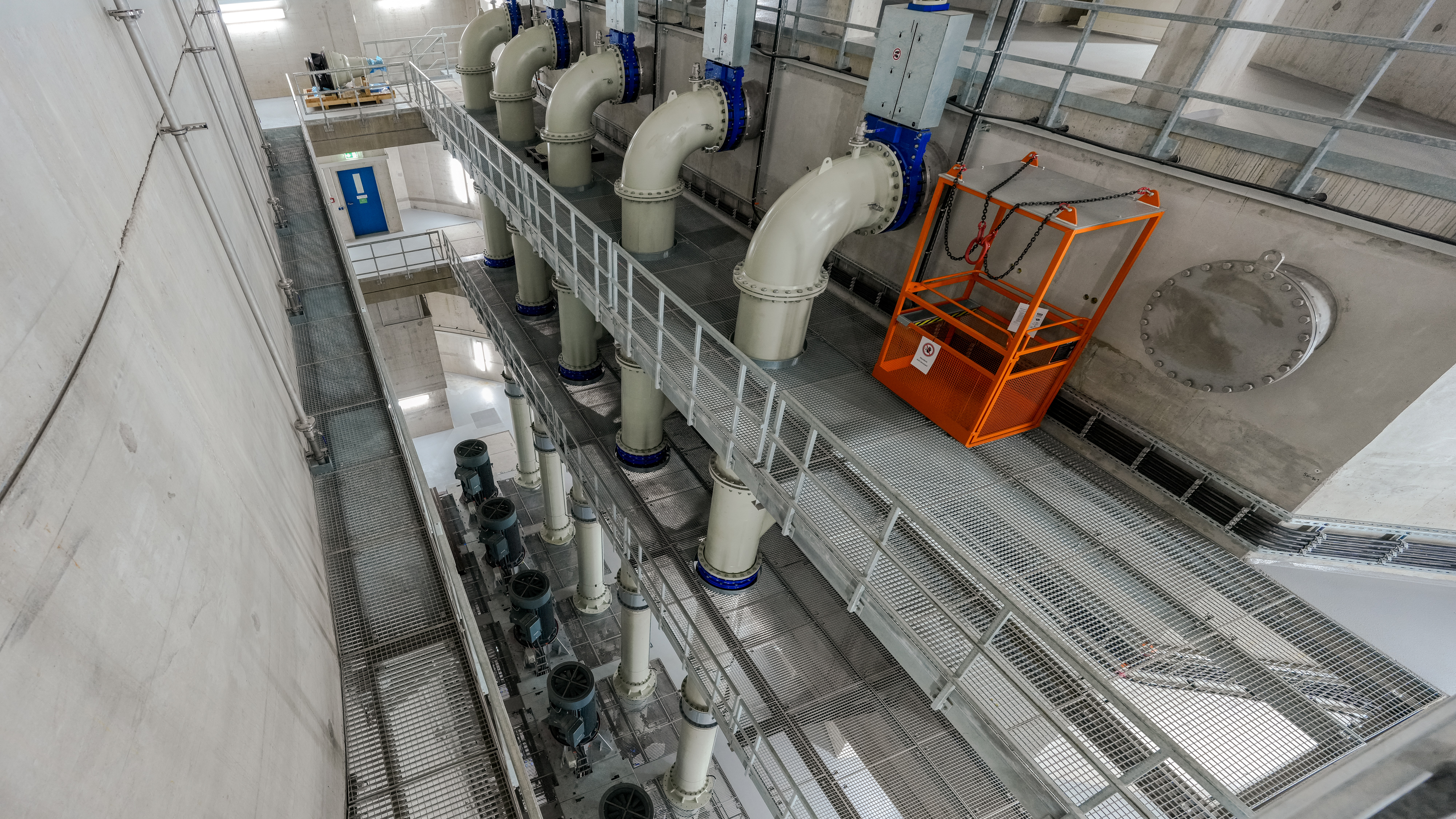
(…) Für Josep Bohigas ist das Ruhrgebiet eine „organische, dezentrale Struktur", mit „materiellen Spuren seiner industriellen Vergangenheit". Wie tief die Spuren sitzen, demonstrieren in der Christ-König-Kirche die langsamen, sterilen Kamerafahrten in einem Video von Niklas Goldbach entlang der Betonwände und mächtigen Maschinen eines Wasserpumpwerks. Wie eine technoide Big-Brother-Dystopie sieht das aus, ist aber Ausdruck eines realen Problems: die Ewigkeitslast. Infolge des jahrhundertelangen Kohleabbaus muss die Region für immer mithilfe massiver Technik entwässert werden, sie würde sonst überflutet. Dass diese Ewigkeitslast schon in spirituelle Sphären hineinragt, zeigt eine schwarze Madonna von Mirosław Bałka aus Kohle und Stahl, die ewig anzubetende (…).
Auszug aus: Sophie Jung, „Staub in der Pantoffelkirche", taz, 21.06.2026
| – |
In Bochum wird deutlich, wie unterschiedlich diese Idee umgesetzt wird. In Christ-König und St. Anna sind die Arbeiten politisch aufgeladen. Niklas Goldbach hinterfragt das männliche Ideal des Bergarbeiters und das Erbe des Bergbaus, zu dem auch dauerhaft laufende Pumpensysteme gehören. Mykola Ridnyi zeigt junge Geflüchtete aus der Ukraine in verstörenden Kinderspielen. Pınar Öğrenci erzählt in Glück auf in Deutschland die Geschichte des regionalen Bergbaus aus migrantischer Sicht. Umweltzerstörung, Krieg, Migration und Arbeit erscheinen hier nicht als Randthemen, sondern als Teil der industriellen und kulturellen Geschichte des Ruhrgebiets.
Auszug aus: Birgit Ostermeier, „MANIFESTA 16 RUHR – Kirchen in neuer Mission", goethe.de
Bochum shows how differently that idea can be realised. In Christ-König and St. Anna, the works are politically charged and historically significant. Niklas Goldbach examines the masculine ideal of the miner and the environmental legacy of coal mining, including the pumping systems that continue to operate. Mykola Ridnyi presents young adult Ukrainian refugees engaged in disturbing children’s war games. In Glück auf in Deutschland, Pınar Öğrenci recounts the history of regional mining from a migrant perspective. Environmental destruction, war, migration and labour are not peripheral topics here, but integral parts of the Ruhr region’s industrial and cultural past.
Excerpt from: Birgit Ostermeier, “MANIFESTA 16 RUHR – Churches on a New Mission”, goethe.de
| – |
Der gesellschaftliche Zusammenhalt im Ruhrgebiet beruhte schon immer auf starken Glaubenssystemen: Früher war es der Glaube, dass die Bergleute den Wohlstand der Nation andauernd sichern werden, propagiert durch hypermaskuline Körperbilder. Heute ist es der Glaube an das Versprechen der Industrie, das Grundwasser für alle Zeit abzupumpen, damit die Heimat sich nicht in eine Seenplatte verwandelt – in unterirdischen Tempeln, hochkomplexen, sichernden Infrastrukturen tief unter der Erde, vom Blick der Öffentlichkeit ausgeschlossen. Begleitet von einem musikalischen Loop, entnommen aus Herbert Grönemeyers ‚Bochum', der Hymne der Region, schließen sich die beiden Systeme kurz.
Niklas Goldbach
The social fabric of the Ruhr region has always rested on strong belief systems: once it was the belief that miners would perpetually secure the nation's prosperity, propagated through hypermasculine images of the body. Today it is the belief in industry's promise to pump the groundwater away for all time, so that the Heimat does not turn into a lakeland – in underground temples, highly complex, safeguarding infrastructures deep below the earth, shut off from public view. Set to a musical loop drawn from Herbert Grönemeyer's 'Bochum', the region's anthem, the two systems short-circuit.
Niklas Goldbach
| – |
FOR THE AGES
Niklas Goldbach – Videoinstallation, 13:40 min, UHD, 5.1, 2026
Manifesta 16 Ruhr · Christ-König-Kirche Bochum · 21.06.–04.10.2026
Download Pressetext pdf
Niklas Goldbach kehrt für die Manifesta 16 Ruhr in die Region seiner Kindheit und Jugend zurück und richtet seine Kamera auf zwei Arbeitswelten, die für das Ruhrgebiet bedeutend und zugleich nahezu unsichtbar sind – beide finden unter der Erde statt: den Bergbau, untrennbar verbunden mit einem heroischen Bild von Männlichkeit, mit den Mythen und dem Lokalpatriotismus der Region, sowie die Wasserpumpwerke, die die Arbeit unter Tage seit jeher begleitet haben und sie als eine der sogenannten Ewigkeitsaufgaben bis heute überdauern. Durch einen queeren Blick befragt er die Ikonografie von Arbeit und Männlichkeit neu.
Nur das fortwährende Abpumpen des Grundwassers schützt das Ruhrgebiet bis heute davor, buchstäblich in seiner eigenen Geschichte zu versinken und zur größten Seenplatte Europas zu werden. Über hundert Jahre Kohleabbau haben den Boden um bis zu fünfundzwanzig Meter abgesenkt, Flüsse umgeleitet und ganze Landstriche unter den Grundwasserspiegel gedrückt. Was die Region heute trocken hält, ist ein unsichtbares System aus Hunderten Pumpwerken, Kanälen und Reinigungsanlagen. Es ist eine technische, finanzielle und ökologische Verpflichtung ohne Enddatum und zugleich eine kritische Infrastruktur, deren Ausfall die öffentliche Sicherheit in Europas größter Metropolregion unmittelbar gefährden würde.
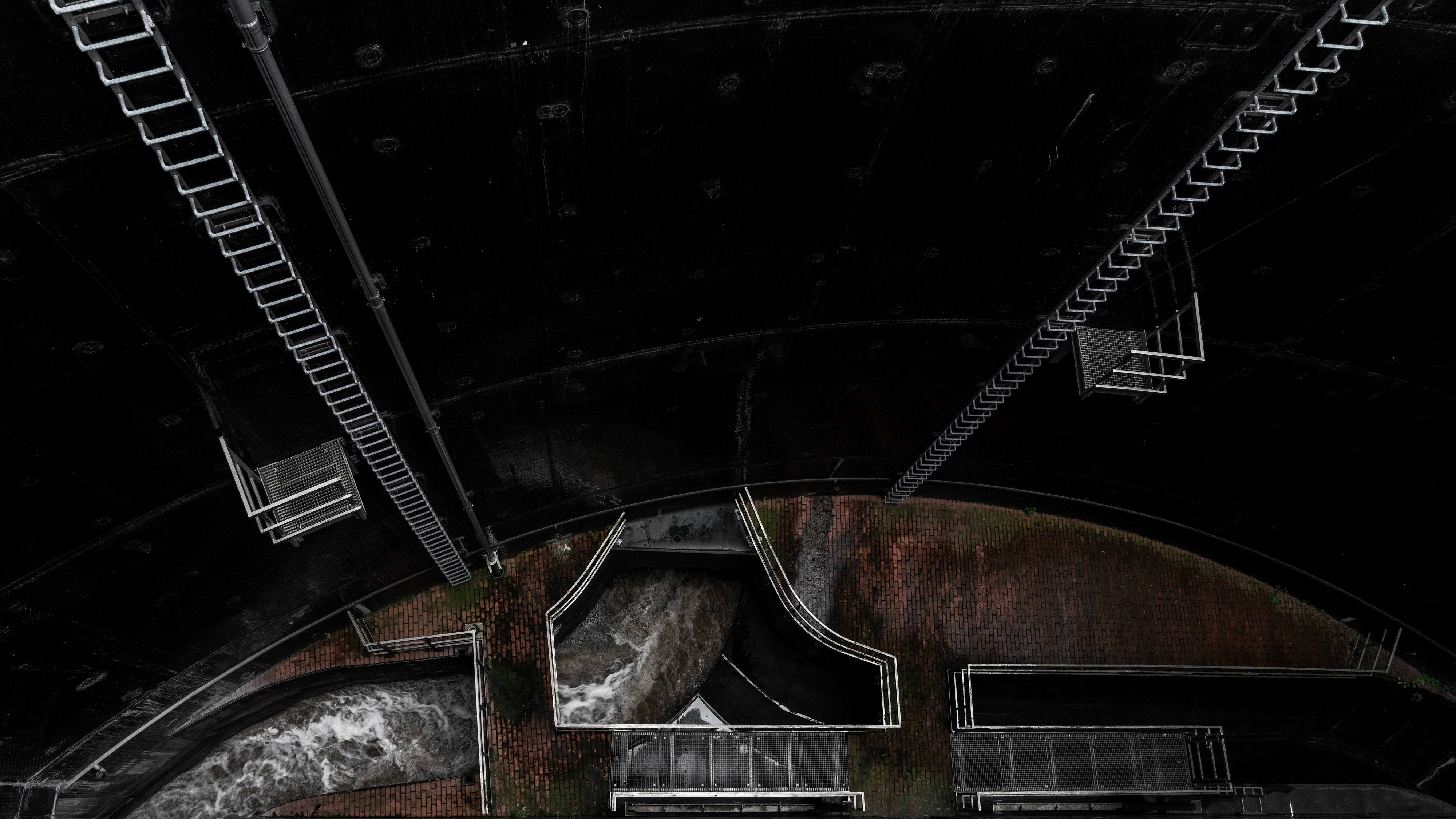
Die für die Manifesta 16 Ruhr entwickelte Videoarbeit FOR THE AGES, ein knapp vierzehnminütiger Loop in UHD und 5.1-Sound, nimmt diese Ewigkeitsaufgaben zum Ausgangspunkt. Gedreht wurde sie im Pumpwerk Gelsenkirchen, einem Bauwerk, das vierzig Meter unter der Erde entstand und 2018 in Betrieb ging, weil der Bergbau den Boden bereits so weit abgesenkt hatte, dass ohne aktives Pumpen nichts mehr abfließen konnte. Goldbachs Kamera seziert das Monument: Maschinen, Rohre, schadhafte Stellen in den unterirdischen Betonwänden, durch die das Grundwasser einzudringen versucht. Sie richtet sich auch nach oben, an die vierzig Meter entfernte Decke, und fängt die Bildgewalt dieser unterirdischen Räume ein. Es sind Kathedralen der Ingenieurskunst: kühle Sichtbetonräume unter Tage, deren Rohre wie Kirchturmspitzen emporragen – monumental, modern und dem Blick der Öffentlichkeit entzogen.
Den Aufnahmen des Pumpwerks stellt Goldbach eine zweite Bildebene entgegen: detaillierte Nahaufnahmen von Bergmannsskulpturen aus der Sammlung des Deutschen Bergbau-Museums Bochum. Die Figuren in der Tradition Constantin Meuniers zeigen idealisierte männliche Körper, muskulös, aufrecht, ohne Verschleiß, mit stolzem, selbstbewusstem Blick. Sie sind junge, gesunde Helden der Arbeit: kleine Salonbronzen, einst als Ehrengaben für verdiente Bergbaubeamte und Industrielle geschaffen und für das bürgerliche Wohnzimmer bestimmt. Die Sammlung wurzelt in der Bildpropaganda ihrer Zeit: Der heroisierte Körper warb für einen Berufsstand, der junge Männer für die Arbeit unter Tage gewinnen sollte, und schrieb sich in den 1930er Jahren bereitwillig in die herrschende Ideologie ein.
Die Tonspur von FOR THE AGES basiert auf einem fünf Sekunden langen Ausschnitt aus Herbert Grönemeyers „Bochum" (1984), der inoffiziellen Hymne der Stadt und der Region, deren Refrain den Bergmannsgruß „Glück auf" trägt. Goldbach verwendet die Karaoke-Version, die niederschwelligste und demokratischste Form von Musik. Geloopt und verlangsamt klingt das Sample wie eine Erinnerung, die sich nicht mehr eindeutig verorten lässt. Über den Skulpturensequenzen weitet es sich zu einem schwebenden, monumentalen Klangraum, in den Aufnahmen des Pumpwerks reduziert es sich auf einen treibenden Puls.
Die Arbeit ist vom 21.06. bis 04.10.2026 in einem Seitenraum des Kirchenschiffs der Christ-König-Kirche in Bochum zu sehen. Creative Mediators: Krzysztof Kościuczuk und Anda Rottenberg.
Pressetext für Manifesta 16 Ruhr
FOR THE AGES
Niklas Goldbach – Videoinstallation, 13:40 min, UHD, 5.1, 2026
Manifesta 16 Ruhr · Christ-König-Kirche Bochum · 21.06.–04.10.2026
Download Press Release pdf
For Manifesta 16 Ruhr, Niklas Goldbach returns to the region of his childhood and youth and turns his camera towards two working environments that are significant to the Ruhr area yet almost invisible – both exist underground: mining, inextricably linked to a heroic image of masculinity, to the myths and local patriotism of the region, and the water pumping stations, which have always accompanied the work underground and, as a so-called 'eternal task', continue to endure to this day. Through a queered gaze, he re-examines the iconography of labour and masculinity.
It is only the ongoing pumping of groundwater that continues to protect the Ruhr region from literally sinking into its own history and becoming Europe's largest lake district. Over a century of coal mining has caused the ground to subside by up to twenty-five metres, diverted rivers, and pushed entire areas below the water table. What keeps the region dry today is an invisible system of hundreds of pumping stations, canals and treatment plants. It is a technical, financial and ecological obligation with no end date and, at the same time, a part of critical infrastructure, whose failure would directly endanger public safety in Europe's largest metropolitan region.
The video work FOR THE AGES, produced for Manifesta 16 Ruhr – a loop of just under fourteen minutes in UHD and 5.1 surround sound – takes these 'eternal tasks' as its starting point. The work was shot at the Gelsenkirchen Pumping Station, a structure built forty metres below ground and commissioned in 2018 because mining had already lowered the ground so much that without active pumping, nothing would drain away. Goldbach's camera dissects the monument: machines, pipes, damaged sections of the underground concrete walls through which groundwater attempts to permeate. The camera also looks upwards, towards the ceiling forty metres away, capturing the visual power of these underground spaces. They are cathedrals of engineering: cool, exposed-concrete chambers beneath the ground, whose pipes rise like church spires – monumental, modern, and hidden from public view.
Goldbach juxtaposes the images of the pumping station with a second visual layer: detailed close-ups of miner sculptures from the collection of the German Mining Museum in Bochum. The figures, in the tradition of Constantin Meunier, depict idealised male bodies: muscular, upright, unmarked by physical exertion, with a proud, self-assured gaze. They embody young, vital heroes of hard labour: small salon bronzes, once created as gifts of honour for distinguished mining and other industrial executives and intended for the middle-class living room. The collection has its roots in the visual propaganda of its time: these heroised bodies promoted a profession designed to attract young men to work underground and were readily aligned with the prevailing ideology of the 1930s.
The soundtrack for FOR THE AGES is based on a five-second excerpt from Herbert Grönemeyer's 'Bochum' (1984), the unofficial anthem of the city and the region, whose chorus features the miners' greeting 'Glück auf'. Goldbach uses the karaoke version, the most accessible and democratic form of music. Looped and slowed down, the sample sounds like a memory that can no longer be clearly located. Against the backdrop of the sculpture sequences, it expands into a floating, monumental soundscape; during the footage of the pumping station, it is reduced to a driving pulse.
The work will be on display from 21 June to 4 October 2026 in a side room of the nave at Christ-König Church in Bochum. Creative Mediators: Krzysztof Kościuczuk and Anda Rottenberg.
Press release for Manifesta 16 Ruhr
| – |
Credits:
FOR THE AGES
Film by Niklas Goldbach
Editing, Sound Design, Post-Production: Niklas Goldbach
Cinematography: Alexander Eckhardt, Niklas Goldbach
Sound Mastering: Christian Obermaier
Music by Herbert Grönemeyer, Courtesy of Grönland Records
Music Mastering: Schneider TM
Filmed on location at
Deutsches Bergbau-Museum Bochum
Pumpwerk Gelsenkirchen
Commissioned for Manifesta 16 Ruhr
Creative Mediators: Krzysztof Kościuczuk, Anda Rottenberg
Co-Produced by Fluentum, Berlin
With generous support from
Bergbau-Archiv Bochum
Deutsches Bergbau-Museum Bochum
EGLV – Emschergenossenschaft Lippeverband
Thanks to
Oliver Badun, Lars Borges, Eddie Chebbi, Lisa Cordes, Joe Davies, Simone Häckel, Silke Neumann, Viktor Neumann, Jan Schöningh, Achim Weber, Michael Weber
© Niklas Goldbach 2026