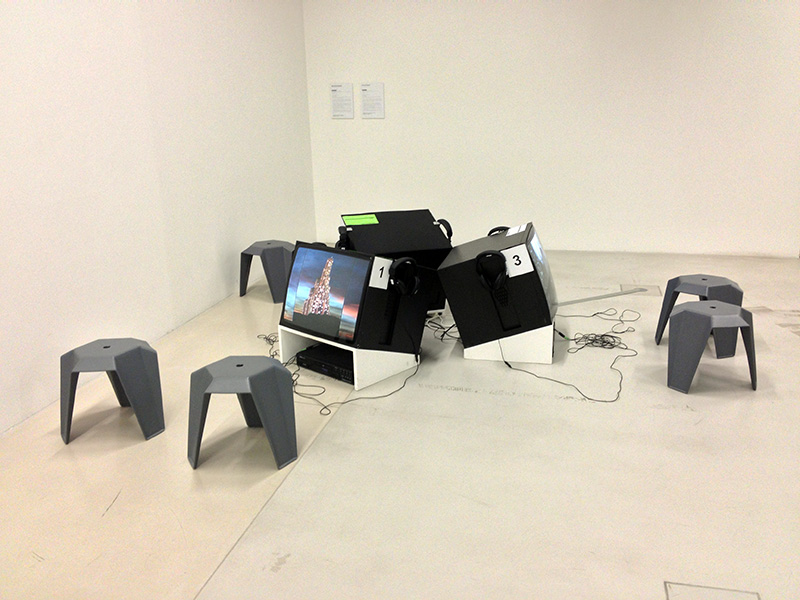
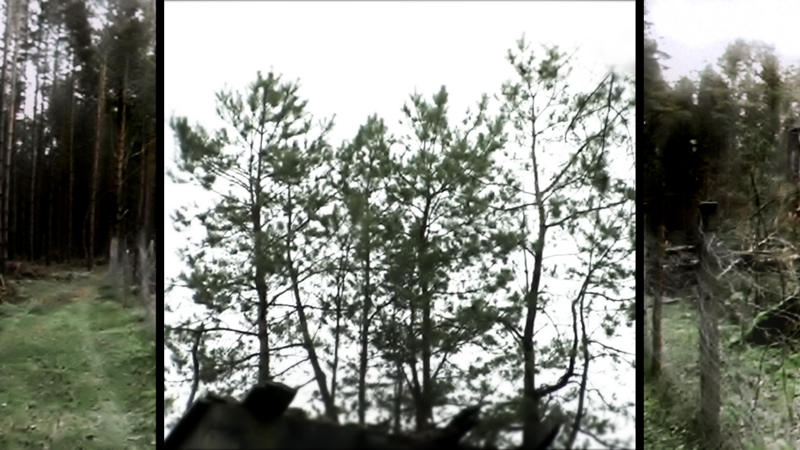
For the radio drama trilogy HOCHHAUS by Paul Plamper, video artist Niklas Goldbach created a video triptych. The film material extends the radio plays while giving the viewer enough space for their own mental images. The combination of radio drama and film was enthusiastically received by the audience; numerous performances of the "radio drama installation" at other venues (including the Museum Ludwig in Cologne) followed.
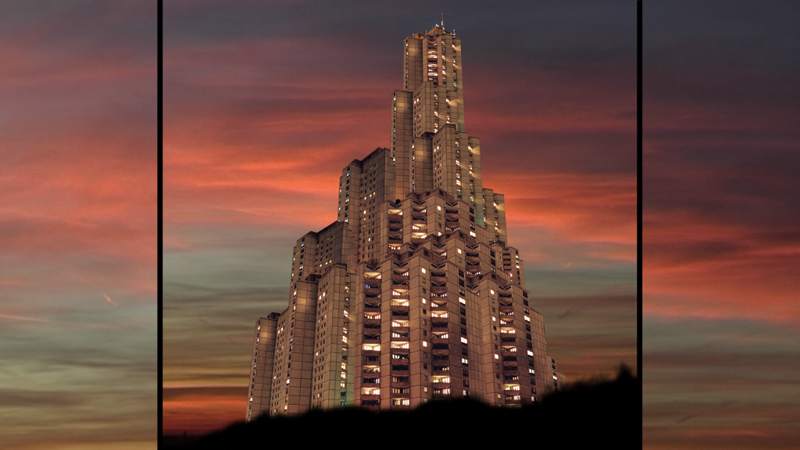
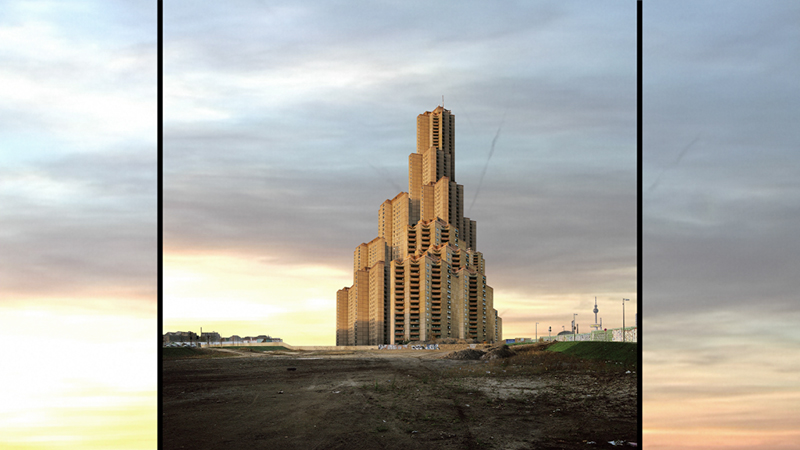
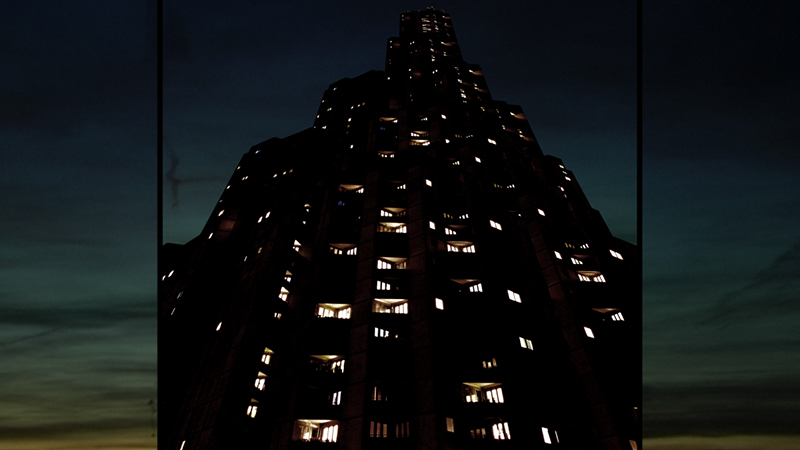
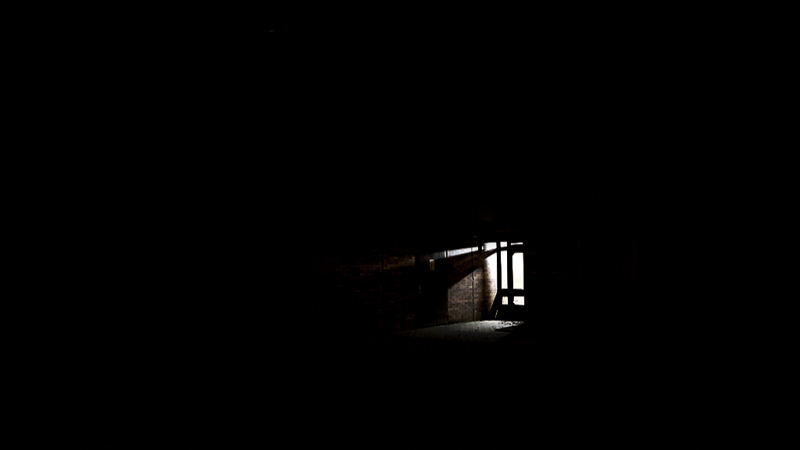
Part 1 shows a fictional social housing complex in Berlin, for which a prefabricated building at Prenzlauer Berg (Ernst Thälmann Park) was photographed at different times of day from various angles and collaged into a much larger building. The camera approaches the building as night slowly falls. With increasing darkness, the building tilts threateningly forward. The camera travels down the building past the illuminated windows and lands at the entrance.
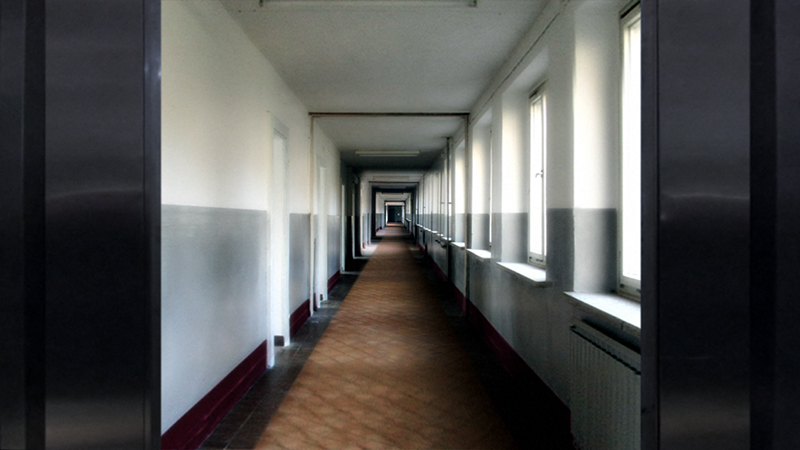
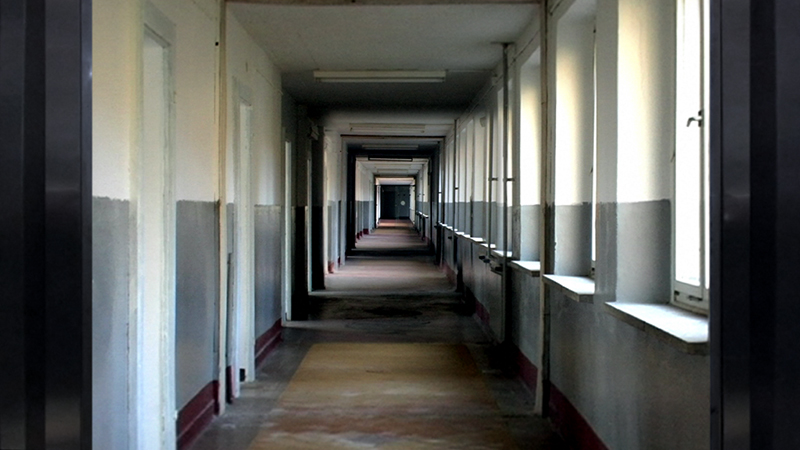
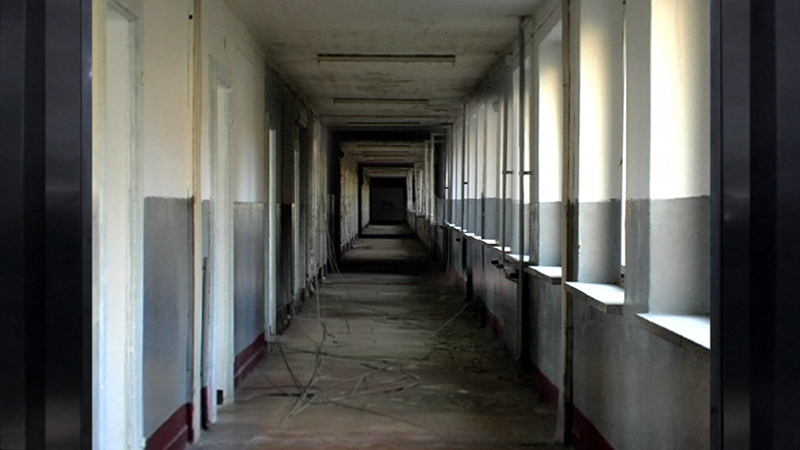
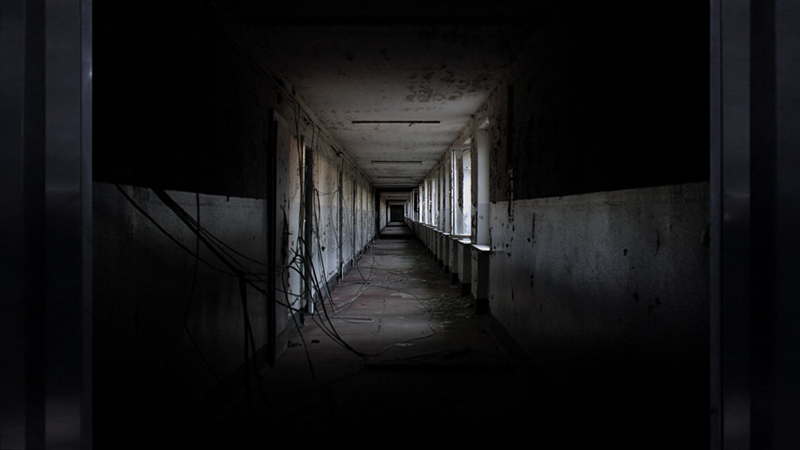
Part 2 was filmed in the corridors of the KDF-Bad Prora (the longest building in Europe), a recreation facility of the National Socialists on the island of Rügen. You see a camera tracking shot in ultra slow motion, initially in a well-maintained corridor of the complex. Over the course of the 55 minutes, an almost imperceptible crossfade occurs to a ruined corridor in the same complex a few blocks further.
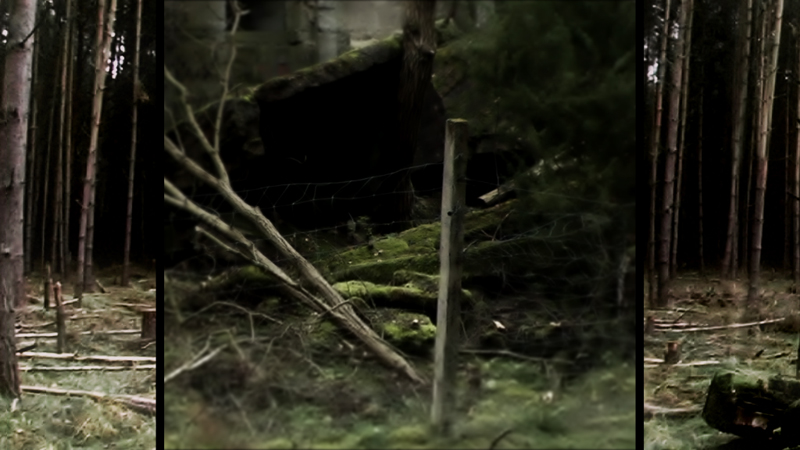
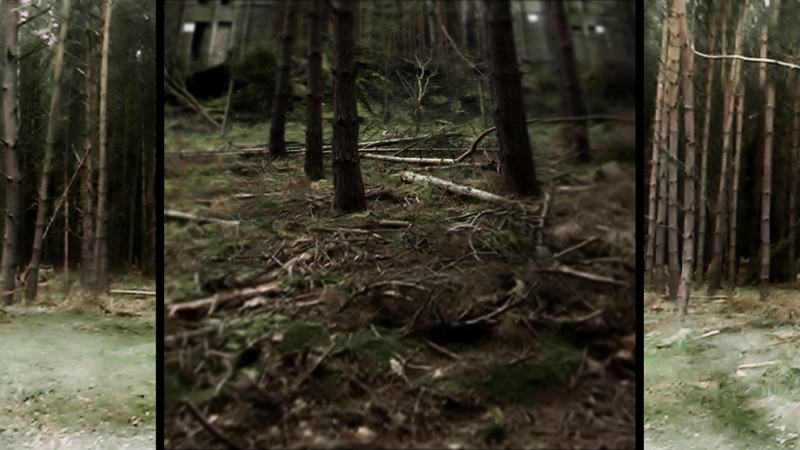
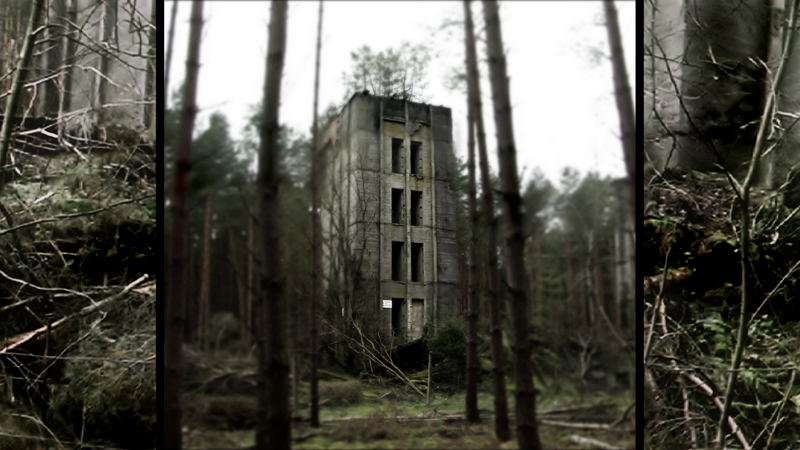
Part 3 was filmed at Albert Speer's test buildings for the planned "Reich Capital" Germania, which today stand abandoned in a forest in Mecklenburg-Vorpommern. In the thicket, the camera moves away from a wooden cross stuck in the ground and pans to the dilapidated concrete block. Zooming in on the building, it travels upward and finally shows the trees on the roof, the "green cap" from Part 1. The final image is nature growing out of the concrete.
The filming locations, according to Niklas Goldbach, are not to be understood as mere political quotations. Rather, the video artist is interested in the dystopian quality of the selected architecture. The failure of the utopian thought embodied in the buildings. Architecture that carries drafts of utopias before it, while at the same time disregarding the people onto whom these social designs were projected.
Text: Fabian Kühlein
Interview with Dan O'Hara for Ballardian.com (in english):
http://www.ballardian.com/you-are-hochhaus-ballard-in-berlin