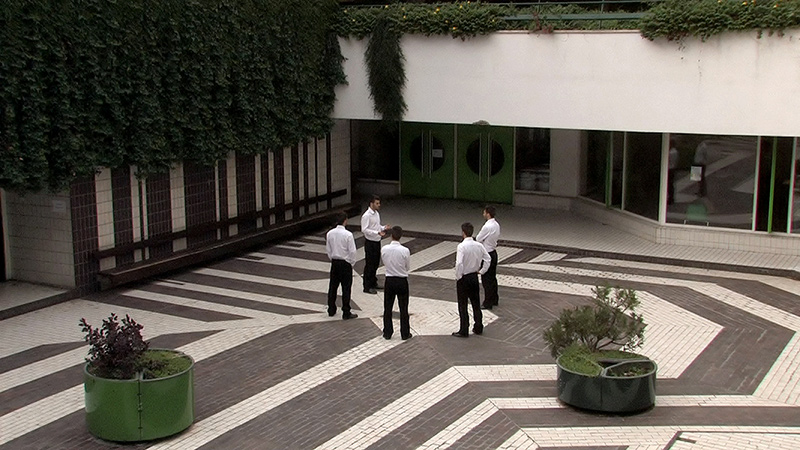
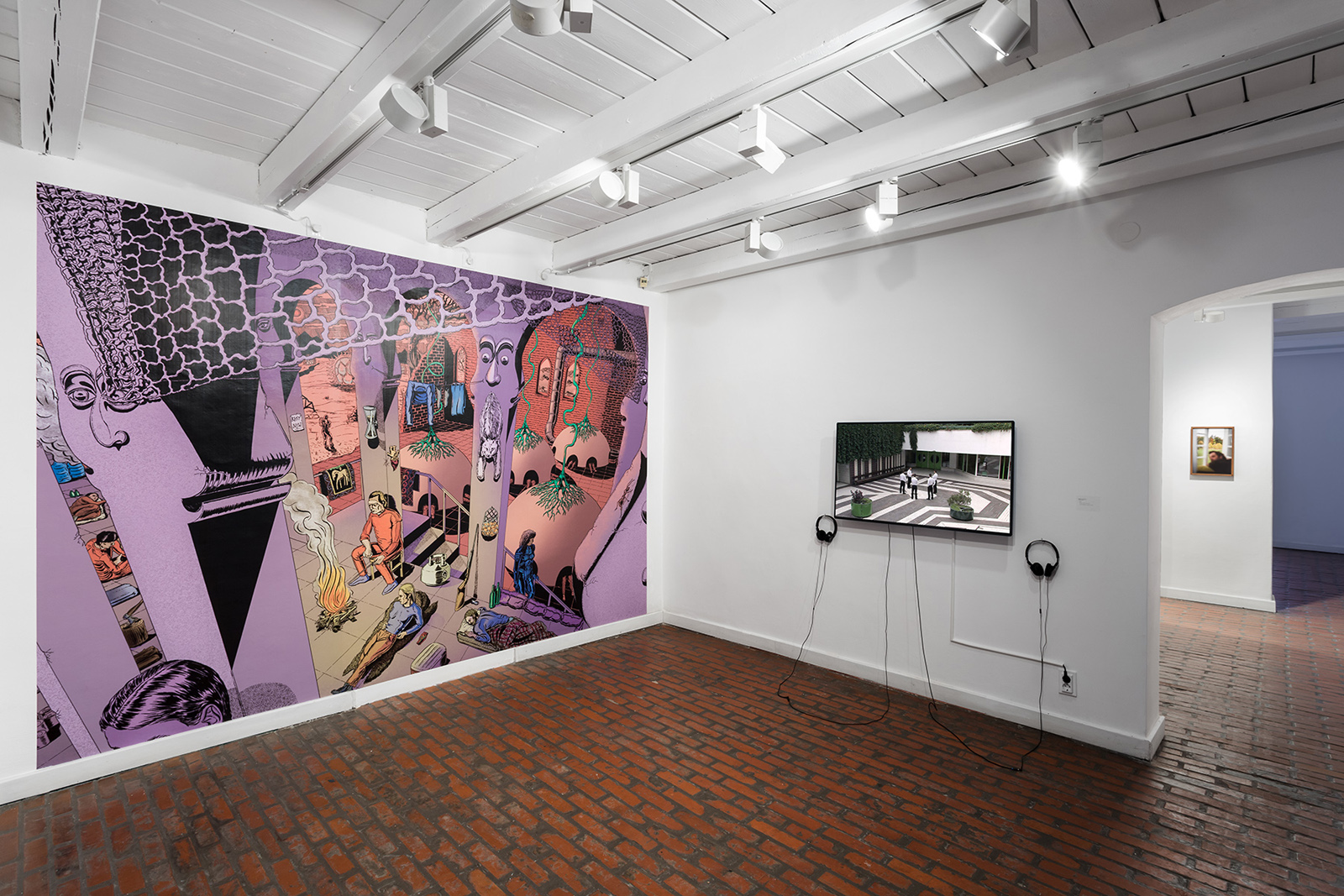
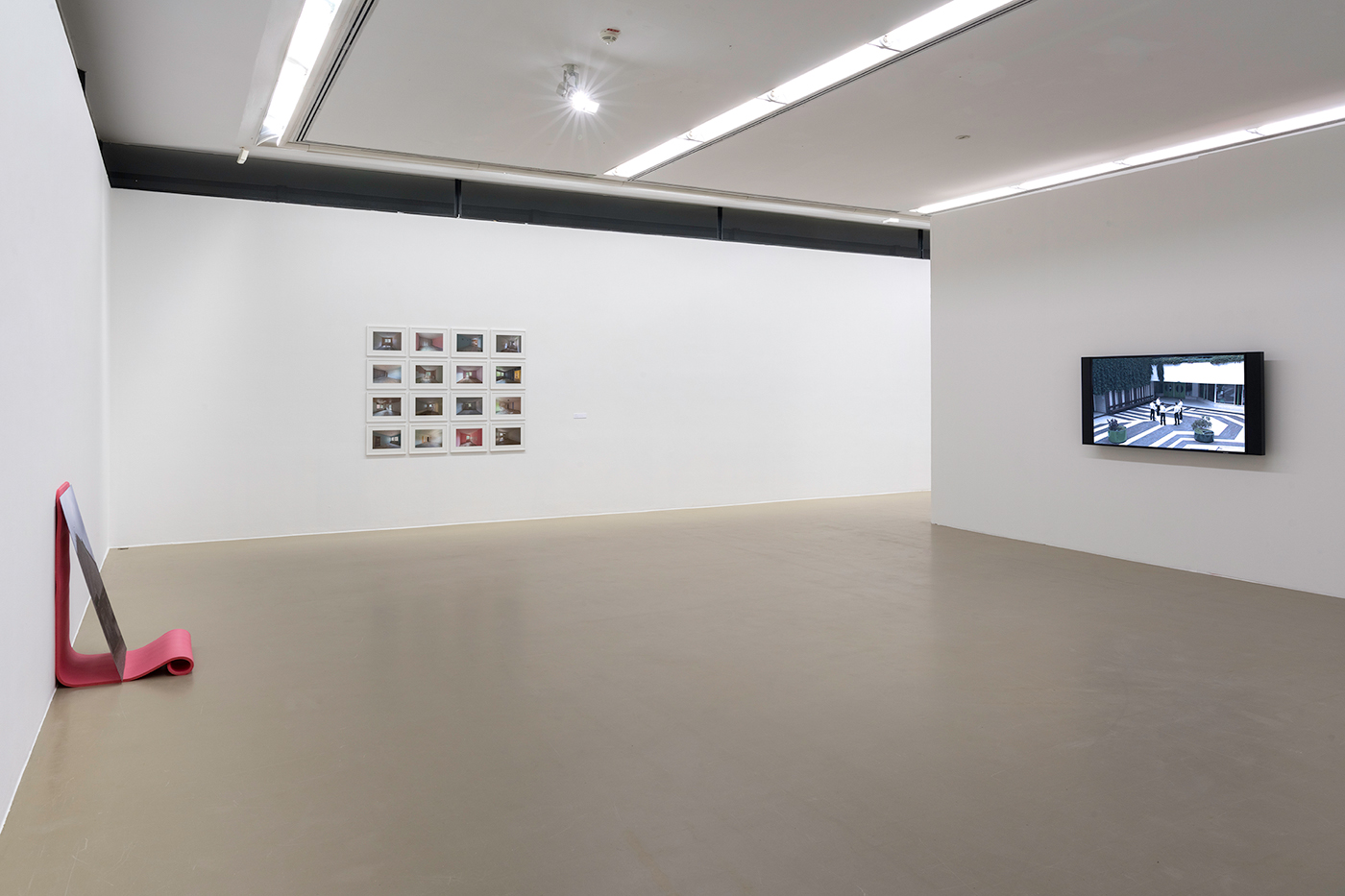
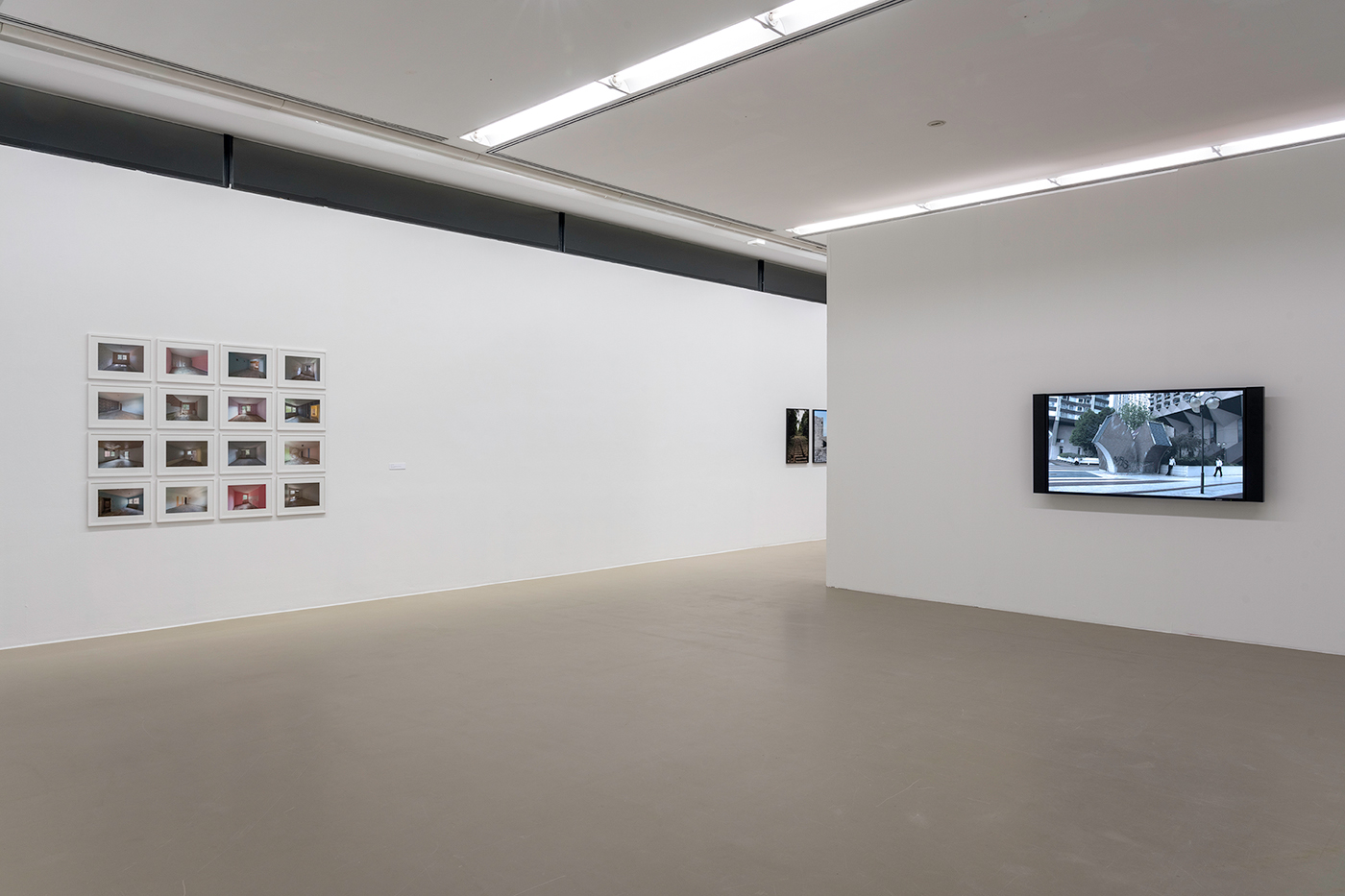
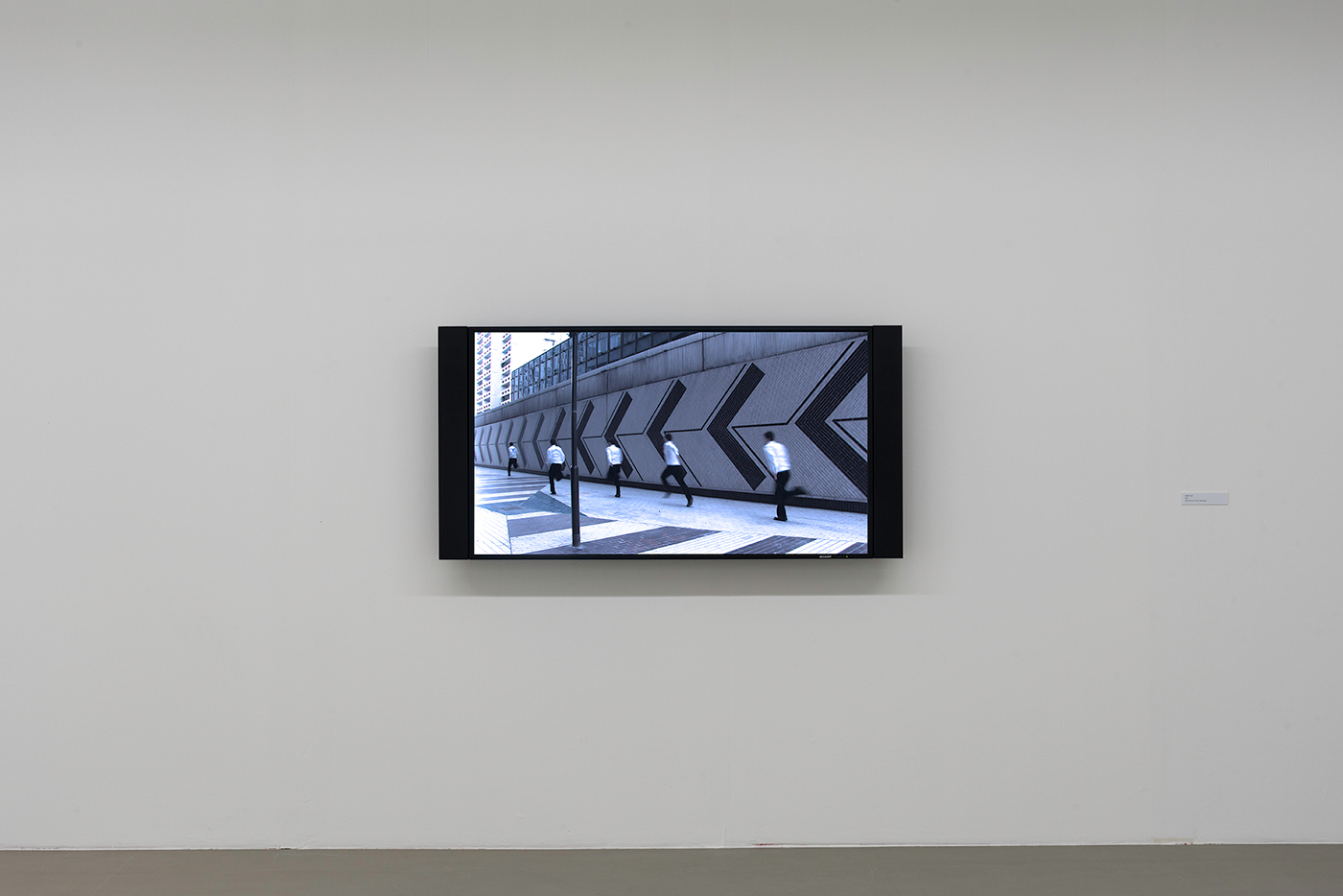
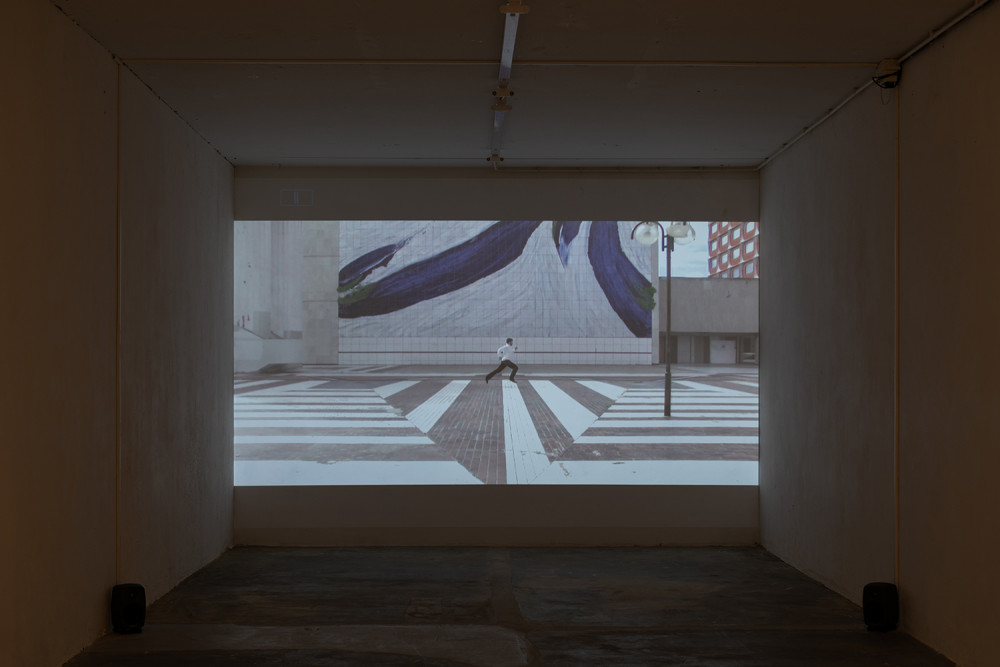
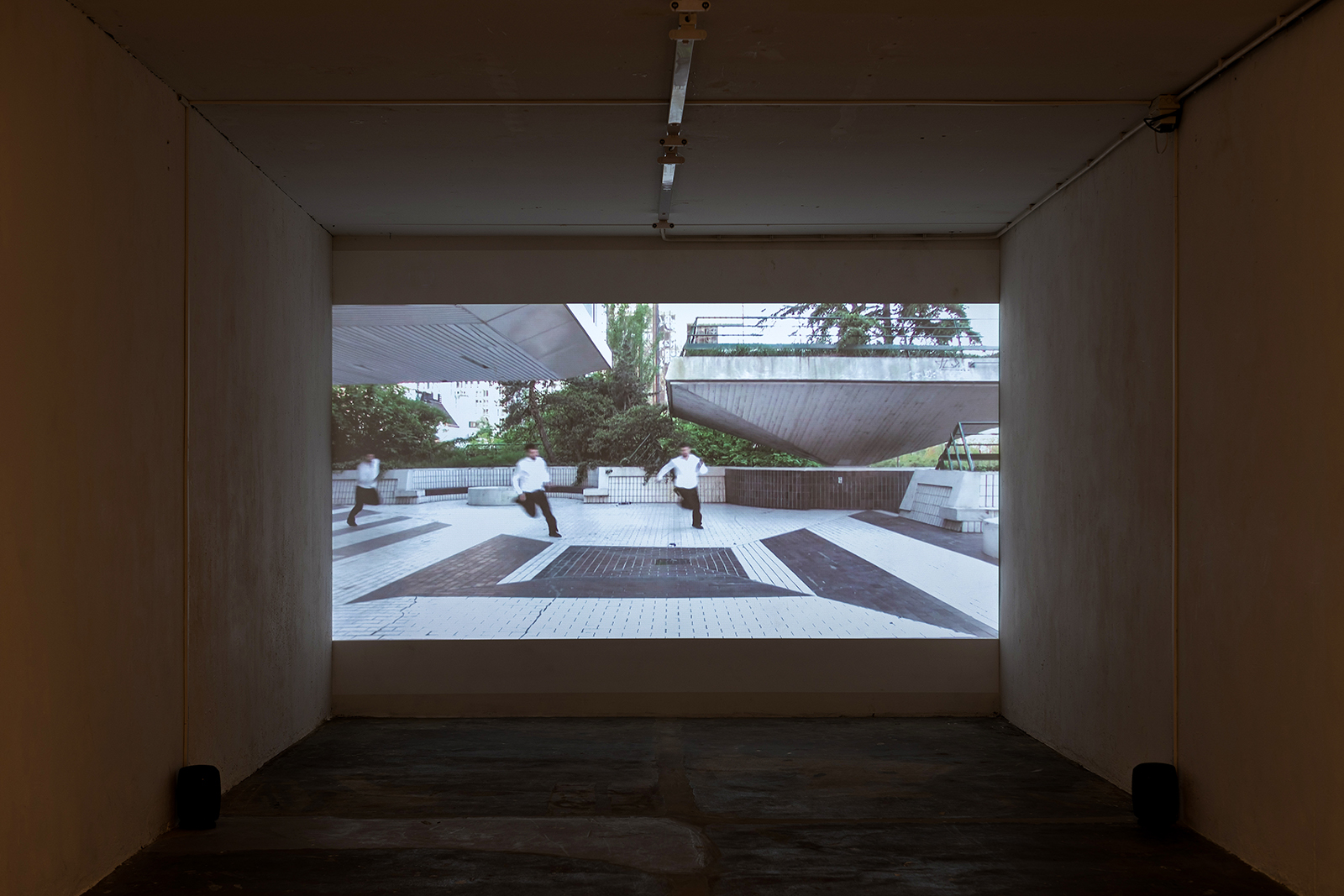
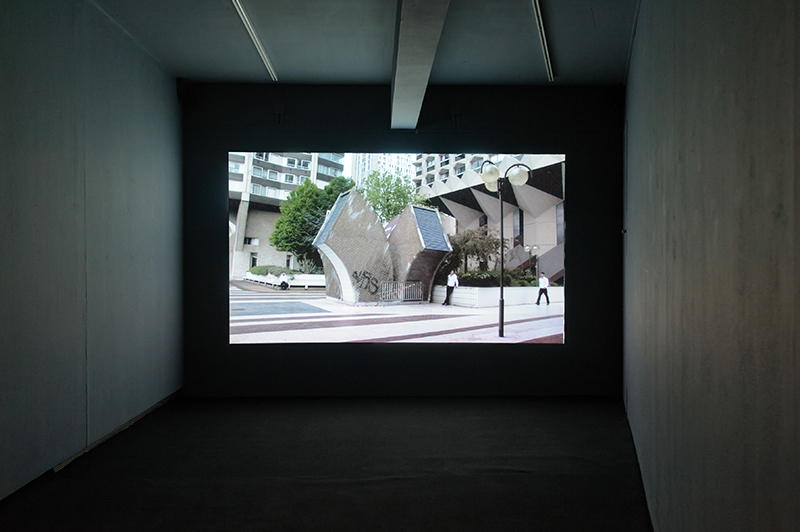

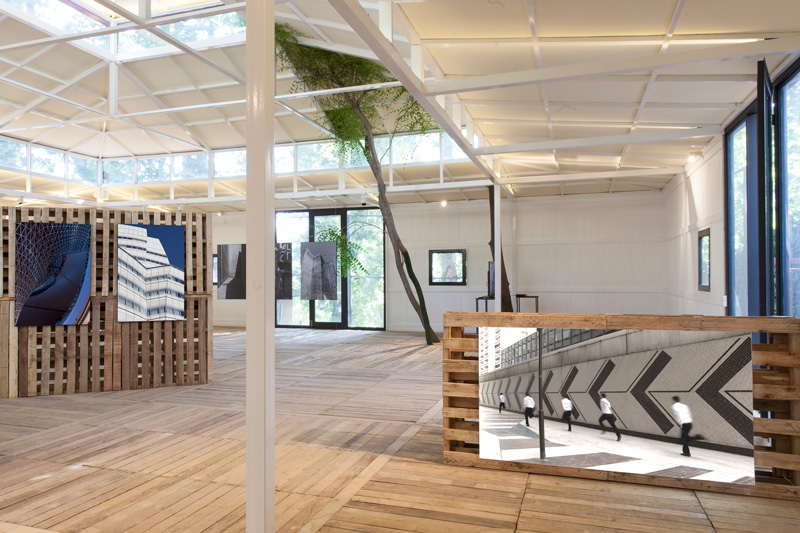
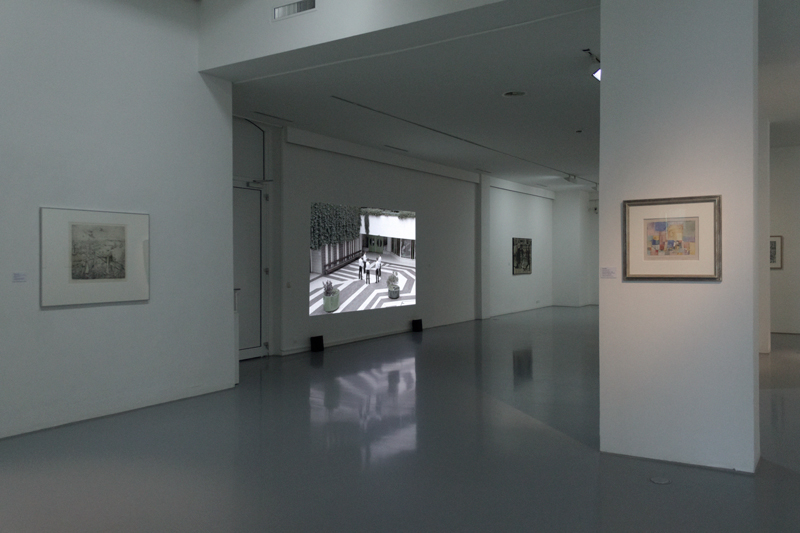
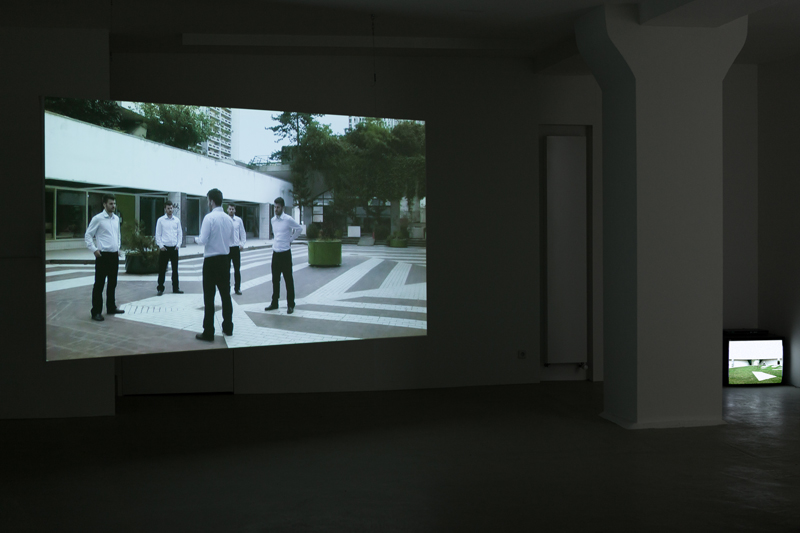
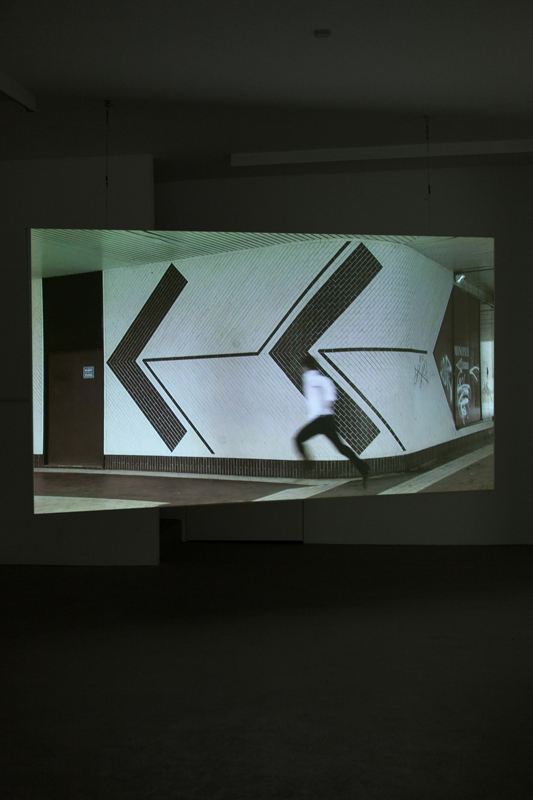
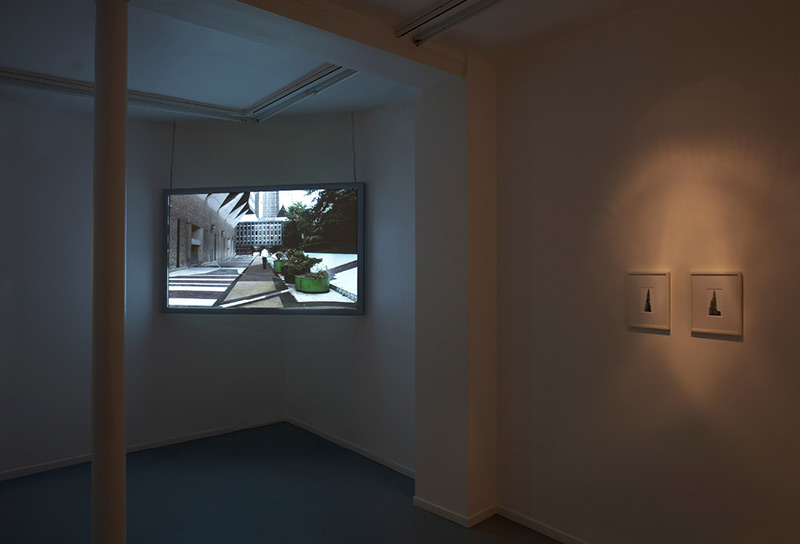
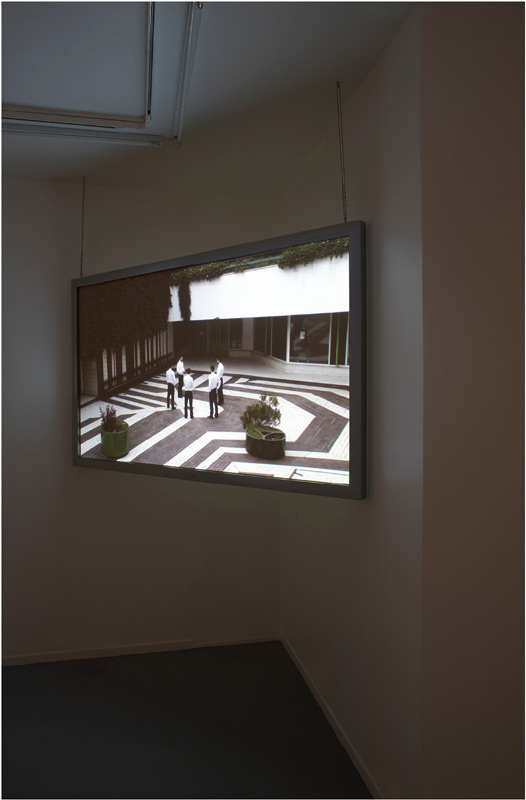
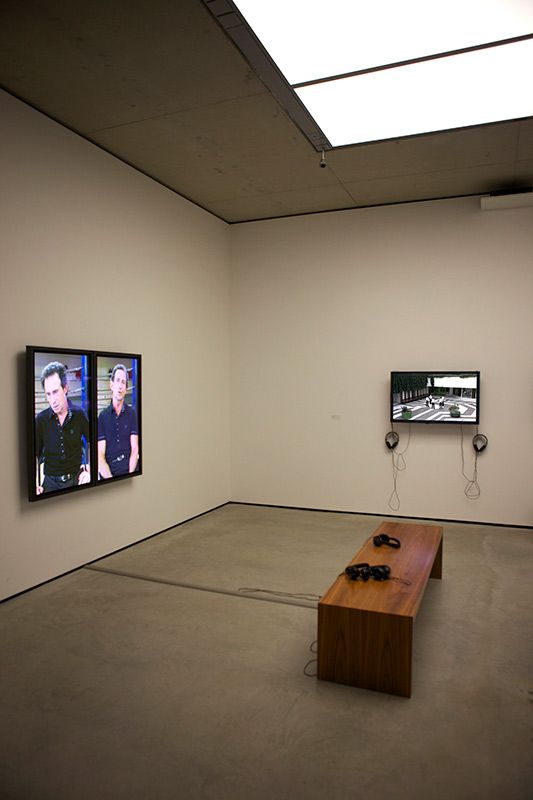
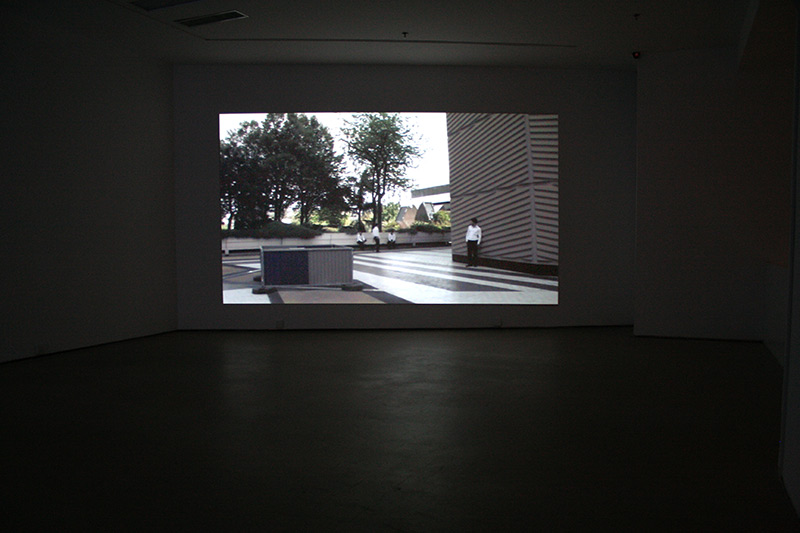
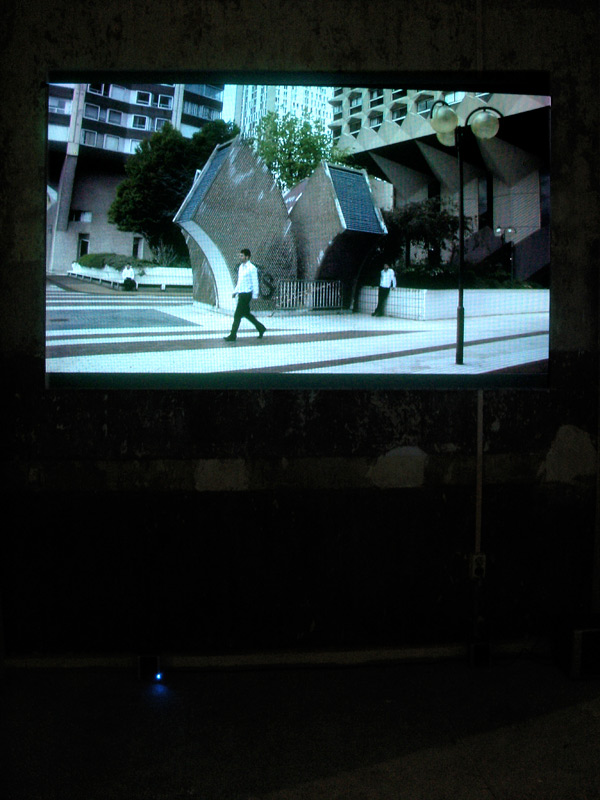
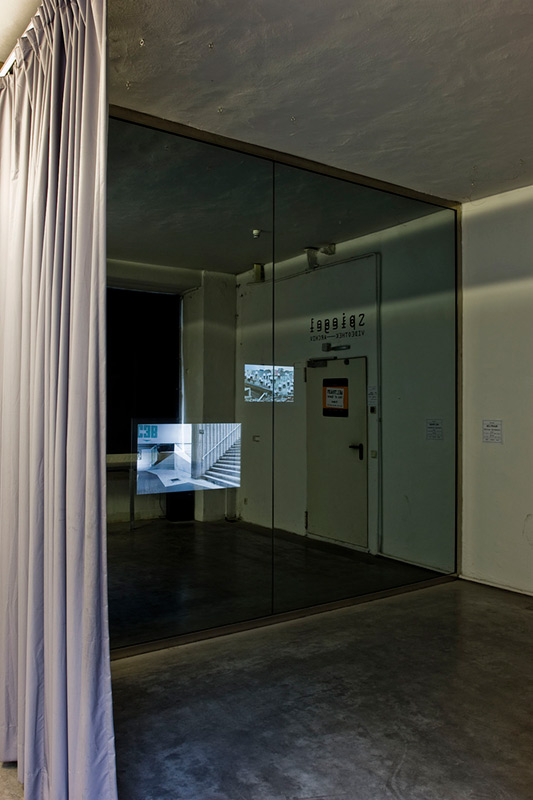
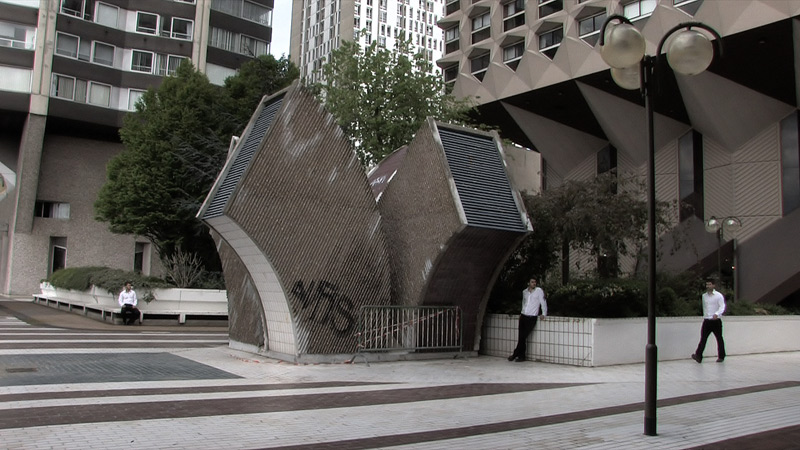
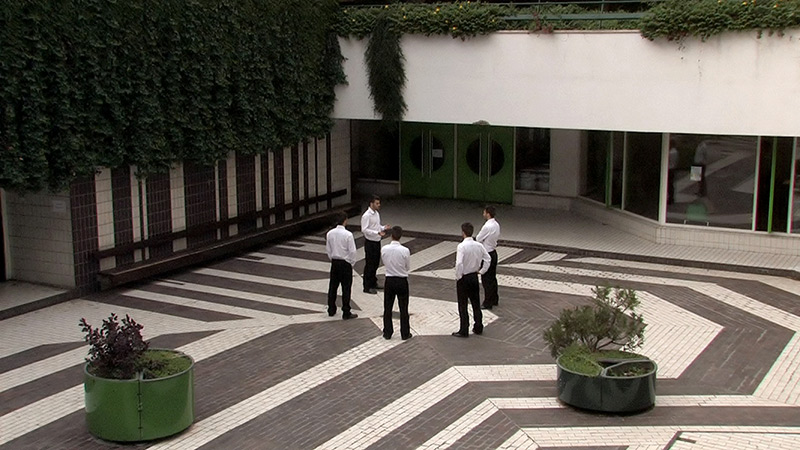
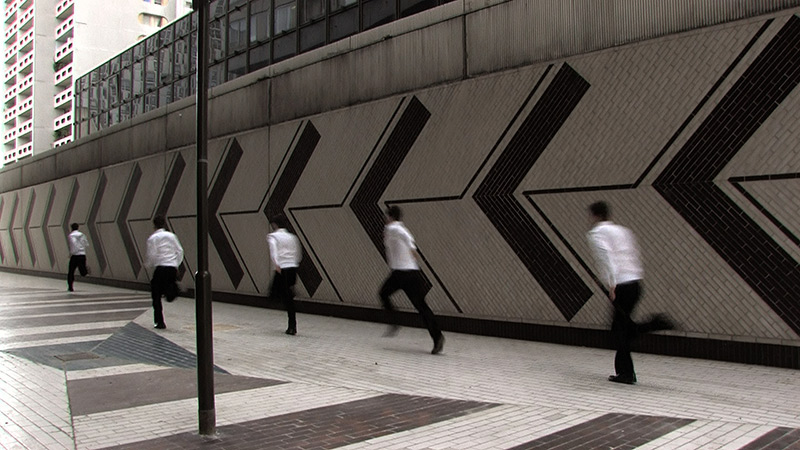
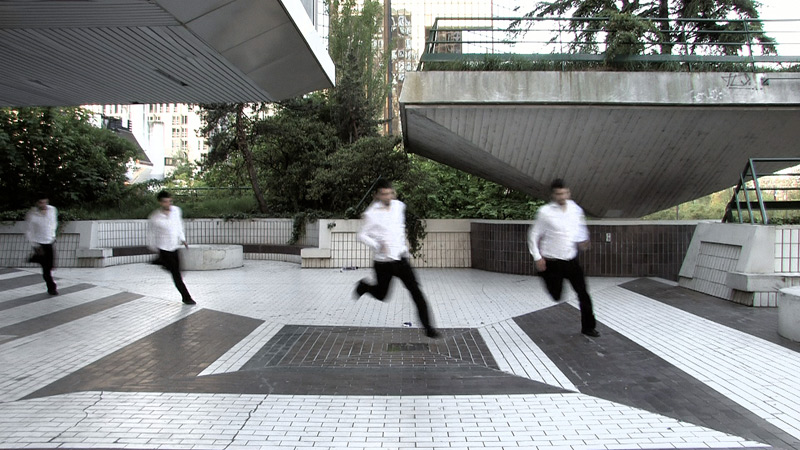
HABITAT C3B was filmed in 2008 in the district of Front de Seine (also known as Beaugrenelle) in the 15th arrondissement right at the South of the Eiffel Tower. The district, built in the 1970s, is a result of Georges Pompidou's attempt to modernize the city. It includes about 20 towers reaching nearly 100 meters of height built all around an elevated esplanade paved with frescos that can only be perceived from the elevated floors of the towers. Largely fallen into disrepair, the City of Paris has launched a major project to renovate Front de Seine.
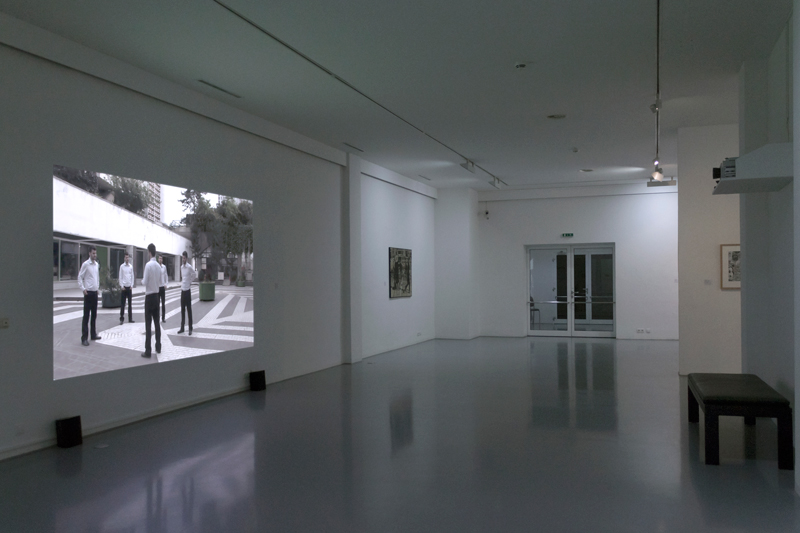
Front de Seine, a development in the district of Beaugrenelle in the 15th arrondissement of Paris, south of the Eiffel Tower, is another kind of powerless structure from the past which failed to find its place in the future. Built in the 1970s as a part of Georges Pompidou's project to modernize the city, the district includes about 20 towers reaching nearly 100 meters of height built around an elevated esplanade paved with frescos that can only be perceived from the heights of the towers. In this dystopian architectural setting Niklas Goldbach has staged HABITAT C3B, a film whose characters are trapped in a public space, behaving like animals out of a cage. Lonely and cold inhabitants of the space are all men, presumably office clerks. Dressed identically, they seem to be in control of this space and at the same time they look powerless.
Katia Krupennikova, exhibition text Beyond a Certain Point There Is No Return, A Tale Of A Tub, Rotterdam, 02/2023
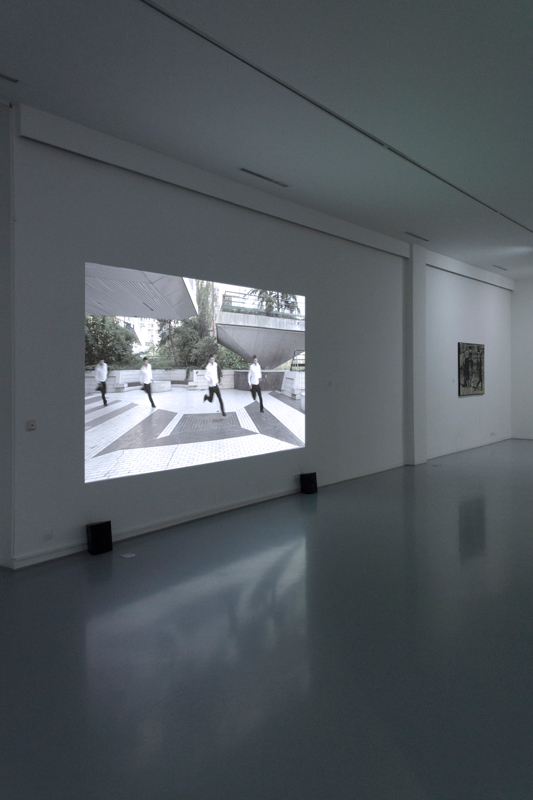
Niklas Goldbach's video HABITAT C3B explores a nearly deserted urban environment populated only by a handful of identical men engaging in an unknown mission. The clone-like characters chase one man that breaks from the group, recalling stock plot twists from science fiction. Produced at the main site of Georges Pompidou's failed gentrification in the 15th arrondissement of Paris, the video chronicles the implied protagonist's journey through a modern yet despondently barren cityscape. The sharp angles of the 1970s architecture provide a stark backdrop to the renegade man, whose simple, repetitive actions become laden with complexity as he encounters others who mirror him in appearance yet chase him through the labyrinthine architecture. The percussion of the footsteps intensifies as the video progresses and punctuates the otherwise still silence. Goldbach heightens tensions between fact and fiction and the ambiguity of reality with long patient shots. He produces a world that is both dystopian and hopeful – the viewer never learns if the outlaw man escapes or is brought back into the fold.
Jennie Lamensdorf, exhibition text LIFT Projects, AMOA-Arthouse, Austin, TX, USA, 14.01.–04.03.2012
In den 1970-er Jahren begann man in Paris mit groß angelegten Maßnahmen zur Sanierung, Modernisierung und städtebaulichen Weiterentwicklung. Architekturtheorien wurden radikal umgesetzt und ganze Stadtteile neu gebaut, sowie das Viertel Front de Seine – ein Prestigeprojekt des damaligen Präsidenten Georges Pompidou. Auch bekannt als Beaugrenelle, ist das Wohnquartier im 15. Pariser Arrondissement mit seiner strengen, vertikal ausgerichteten Architektur, den geometrischen Plätzen, künstlichen Ebenen, Rampen und Treppen nicht nur ein unwirklicher Ort, sondern auch Schauplatz der Videoarbeit HABITAT C3B (2008) von Niklas Goldbach.
Zunächst eine Bestandsaufnahme der vorgefundenen Situation, werden die folgenden Sequenzen zu einem Spiel mit Realität und Fiktion: Nach und nach tauchen in der menschenleeren Kulisse mehrere Männer als einzige Protagonisten auf. Im Aussehen identisch, mit weißen Hemden und schwarzen Anzughosen uniform gekleidet, sind sie für den Künstler "Stellvertreter" des modernen, zivilisierten Stadtbewohners.
Goldbach entwickelt eine Choreografie des Stadtraums: Wie Klone bewegen sie sich einzeln und in Gruppen innerhalb der labyrinthartigen Architektur, folgen den angelegten (Verkehrs-) Wegen, durchqueren Gänge und Unterführung und versammeln sich schließlich auf einem Platz. Als einer aus ihrem Zirkel ausbricht, beginnt eine Verfolgungsjagd, bis der Betrachter die Orientierung verliert: Wer befindet sich eigentlich auf der Flucht? Letztlich scheinen alle Akteure wie Tiere in einem Käfig gefangen zu sein, auf der Suche nach einem Ausweg. In HABITAT C3B bleibt offen, ob dies gelingt und ein Entkommen möglich ist.
Am Beispiel Beaugrenelles thematisiert Niklas Goldbach die Überwachung des Einzelnen innerhalb eines geschlossenen Systems und untersucht dessen soziale Hierarchien, Kontroll- und Machtmechanismen, für die er vor dem Hintergrund postmoderner Architektur klare, hochästhetische Bilder findet.
Anja Bauer, Katalogtext Schauplatz Stadt, Kunstmuseum Mülheim an der Ruhr, 03/2013
During his stay in the Pavillon, Laboratoire de création de Palais de Tokyo, Niklas Goldbach concentrated on the transit spaces of Paris. In HABITAT C3B, his characters are trapped in a public space, behaving like animals out of a cage. In front of these large long takes where the only movement is the one of the body, the spectator wonders about the place and role of these strange living creatures: are they here to control us like militias, or, on the contrary, are they controlled beings, the reflects of an entirely standardized society? Niklas Goldbach immerses us into his questionings, but never tries to solve them: nothing matters but the action that is occurring in front of our eyes.
Ange Leccia, director of the Pavillon, Palais de Tokyo, Paris
In Niklas Goldbach's HABITAT C3B, the urban topology is visualised as a complex labyrinth of structures and forms, quasi lifeless, cold and barren in spite of the vegetation – a landscape like out of a science fiction movie, familiar yet strange. It is inhabited by restless characters resembling cloned office clerks, trapped in a space, in a loop-like nightmare. The spectator is left wondering about the topology, the role of the creatures. The images evoke questions about standardisation and control (Who controls and who is being controlled?), about form and reason, about the emotional impact of urban topology on society and its interaction with the life forms inhabiting it.
Pierre Wolter & Melanie Zagrean, Stadt am Rande exhibition catalogue
Themes of conceptual repetition and displacement are central to the video work of Niklas Goldbach. The phenomenal context frames the disorienting effect set up by a story that has no beginning or end. In Habitat C3B we find a phenomenological non-narrative that presents itself as sequential repetitive events of both actions and participant, and whose meaning and comprehension is left largely to the viewer. In a world that is now overwhelmingly mediated by images the videos of Goldbach present a sense of fragmented punctum, a partial sensory poignancy that becomes a self fulfilling end in itself. Today we increasingly build our picture of the world (habitat) from the part-narrative of purely sensory experiences such as these.
Mark Gisbourne
Man muss nur nehmen, was da ist. In den Orten, die Niklas Goldbach für seine Video- und Printarbeiten auswählt, verdichten sich dystopische Aspekte zivilisierter postmoderner Lebenswelten, und selbst die scheinbar unberührte Natur ist vom Menschen domestiziert. Spuren von Gesellschaftsentwürfen, sozialen Hierarchien, Kontroll- und Machtsystemen finden sich allenthalben. In vielen seiner Videos besetzt Goldbach die vorgefundenen Kulissen mit Protagonisten, die er als »Stellvertreter« bezeichnet: Klone ein und derselben Person, gekleidet in die Uniform des modernen Stadtbewohners – weißes Hemd mit schwarzer Hose. Die Szenarien, die Goldbach entwirft, ergeben sich aus den Schauplätzen selbst; sie spiegeln die Wirklichkeit des Vorhandenen und sind auf diese Weise fiktiv und real zugleich.
Einer dieser Schauplätze ist Beaugrenelle (oder Front de Seine), ein in den 1970er Jahren als Prestigeprojekt Georges Pompidous aus dem Boden gestampfter, in sich abgeschlossener Stadtteil, bestehend aus Hochhäusern, die das alte Paris Haussmanns weithin sichtbar überragen. Das Konzept war so sozialutopisch wie elitär: In der Vertikale angeordnet, sollten die privilegierten Bewohner aus verschiedenen sozialen Schichten der Enge, dem Schmutz und der schlechten Luft der Stadt entkommen können. Das Projekt scheiterte wie so viele seiner Art, die Gebäude wurden dem Verfall preisgegeben. In HABITAT C3B (2008) bildet dieser Ort die Bühne für das Bruchstück einer Narration. Ein Stellvertreter bewegt sich durch die verschachtelten Unterführungen und Gänge zwischen den Häusern, überquert Plätze, begegnet hier und da einem seiner Doppelgänger, bis er auf eine ganze Gruppe von ihnen stößt, die einen Zirkel bildet, in dem ein Platz frei ist. Als sie den Einzelnen entdecken, nehmen sie die Verfolgung auf, eine Jagd beginnt, die sich im Kreis zu drehen scheint, bis nicht mehr klar ist, wer Verfolger und wer Verfolgter ist. Die Überwachung des Einzelnen durch viele ist in der architektonischen Struktur Beaugrenelles explizit vorgesehen. Die Wohntürme ermöglichen einen umfassenden Blick auf die Plätze, Verbotsschilder regulieren, ein Wachmann besorgt den Rest. »Schöner Wohnen« in der Adaption von Benthams Panopticon, »Überwachen und Strafen« in gekacheltem Ambiente.
Katrin Sauerländer
Credits:
With: Daniel Reuter
Foley Artist: Martin Langenbach
Sound Design: Christian Obermaier
Co-Produced by Le Pavillon, Palais de Tokyo, Paris